Sara Flores and the pre-Columbian Designs that Encode Indigenous Cosmology and Healing
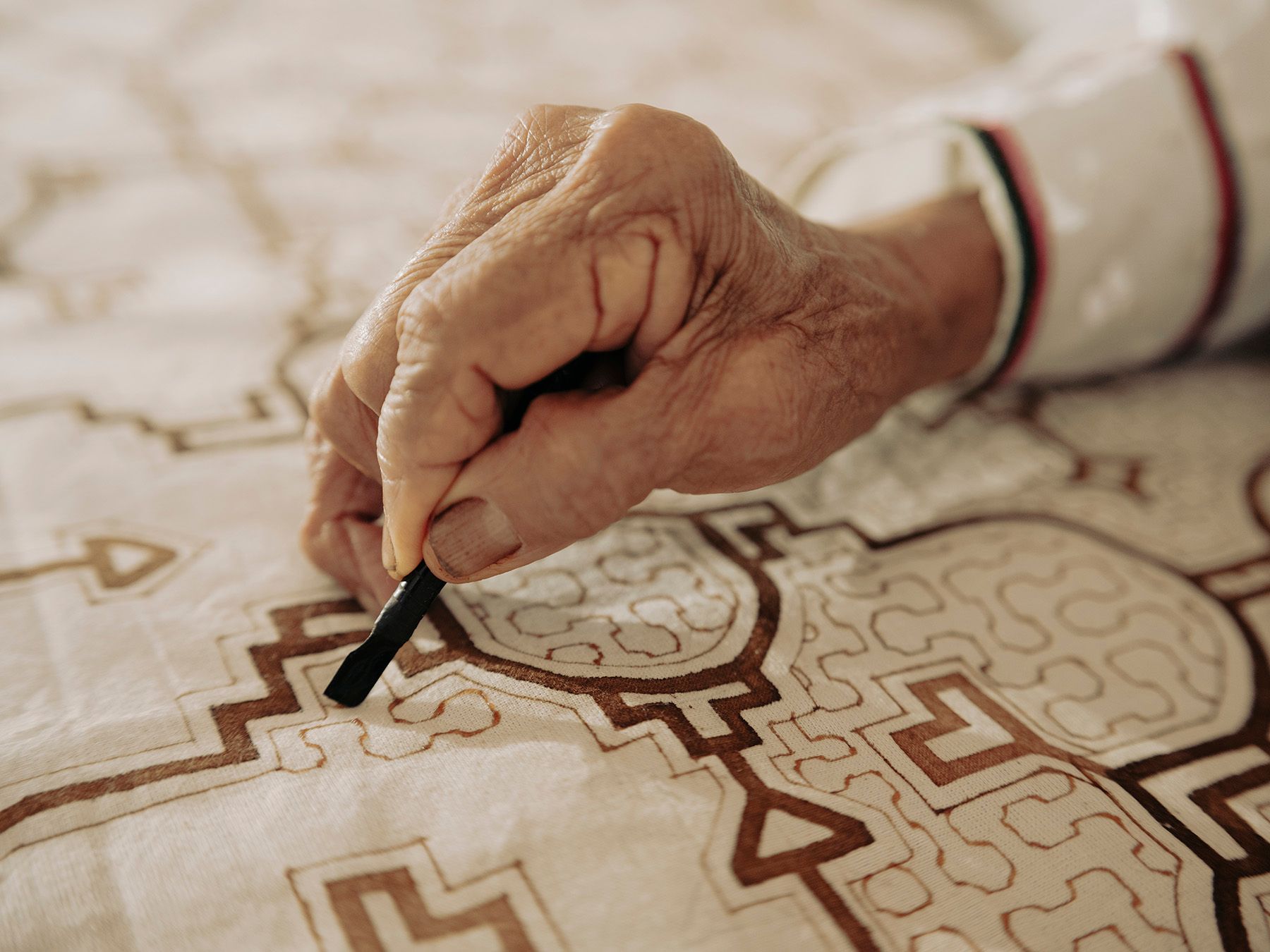
Sara Flores, 2026. Photo: Musuk Nolte. Courtesy of the Shipibo-Conibo Center, NY
The Shipibo-Konibo artist from the Peruvian Amazon is the first Indigenous artist to represent Peru at the Venice Biennale. The exhibition features hanging textile sculptures and wall pieces painted with kené, an ancient geometric painting tradition that encodes identity, cosmology and healing.
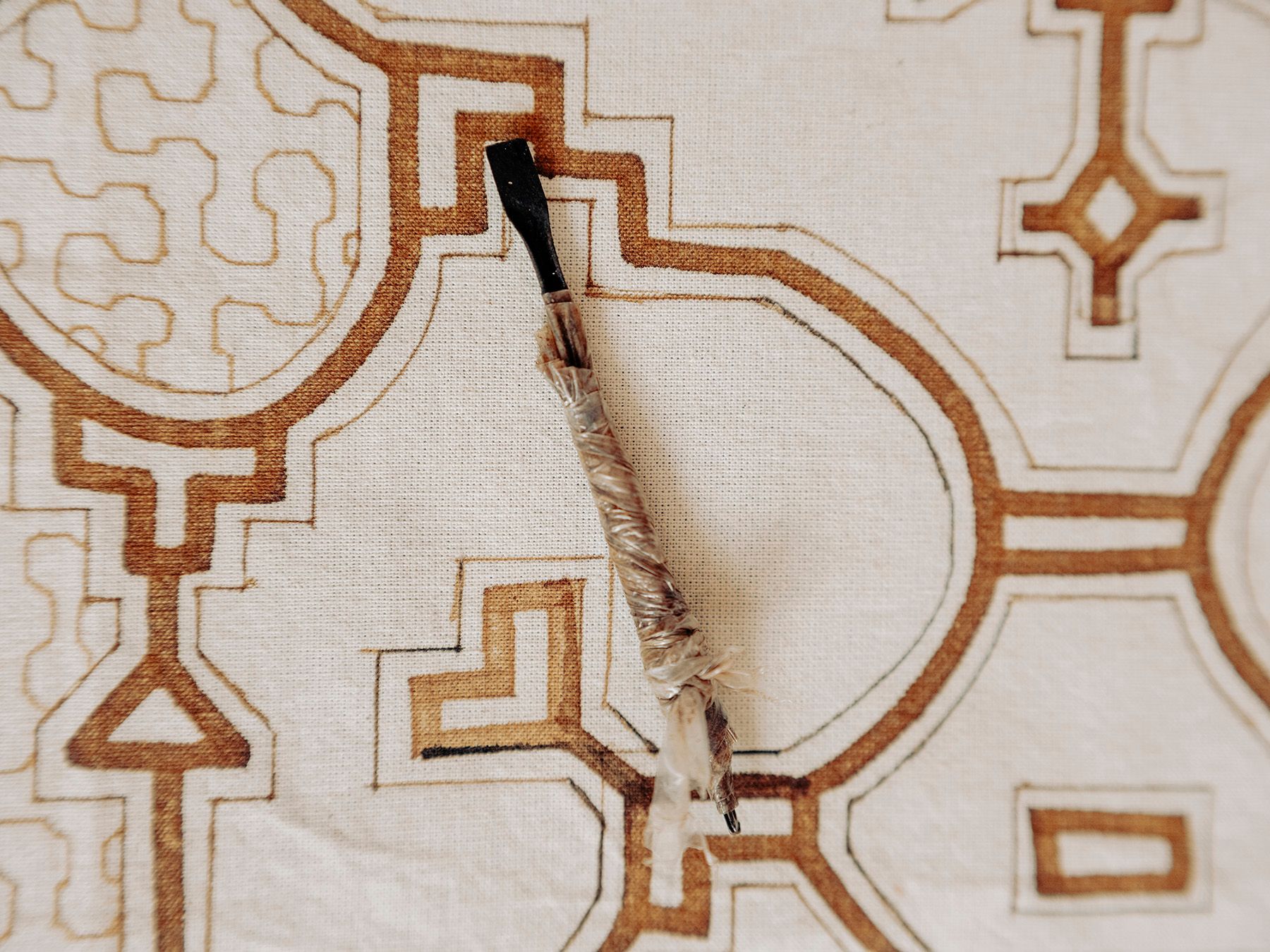
Artist Sara Flores remembers being initiated into the matrilineal tradition of kené—a Shipibo-Konibo geometric painting practice—on the banks of the Ucayali River in the Peruvian Amazon. “The forests were nearby,” she tells me via email. “You could walk to them and find everything you needed: plants for healing, clay from the lagoons for pottery, tree bark for dyes.”
Dating to pre-Columbian times, kené encapsulates the Shipibo-Konibo people’s ancestral link with the Amazonian forest. Seated in circles on the floor, Flores and her companions developed their craft guided by a spirit of reciprocity, with knowledge transmitted through communal practice. Now, at 76, Flores is the first Indigenous artist to represent Peru at the Venice Art Biennale, with an exhibition of hanging textile sculptures and wall pieces painted with kené.
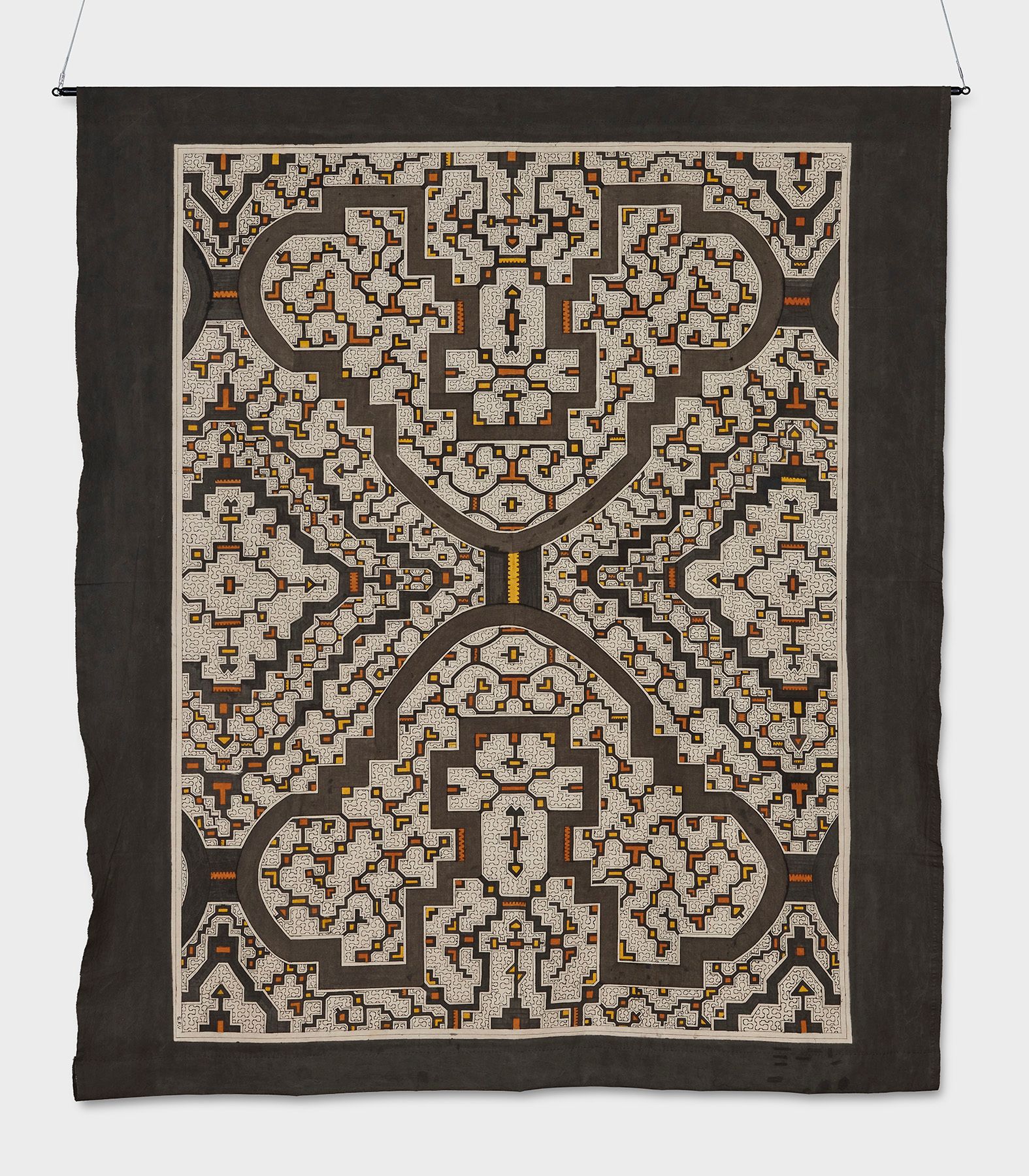
Sara Flores, Una bandera para la Nación Shipibo-Xetebo (A Flag for the Shipibo-Konibo-Xetebo Nation), 2024. Tintes naturales sobre tela 154 x 191 cm (pintada por dos lados). Cortesia de la artista, Shipibo Conibo Center, NY. Photo: Juan Pablo Murrugarr
The artist’s work has always been intertwined with her people’s empowerment and agency: in 1976, she co-founded Maroti Shobo, the first women’s cooperative in the Pahoyan region, allowing artisans to sell their work without intermediaries; today, her income helps to fund groups combating deforestation in her native territory and training young people in Indigenous knowledge. For Flores, these intersections between art, ecology and resistance emerge from the concept of akinananti—also the title of her new solo show of kené at New York’s White Cube gallery—which refers to collective work that unites the individual and the environment.
“Kené is our identity, medicine, cosmovision and way of organizing life,” explains Flores. Its patterns are abstract but among their curves, grids, dots and lines, the viewer might see rivers, fishnets, seeds or stellar constellations. “According to our myths, kené was revealed in ancient times, when connections between humans, animals and nature were more direct,” she continues. “The patterns are in the skin of carachama fish, the structure of leaves, the movement of water.”
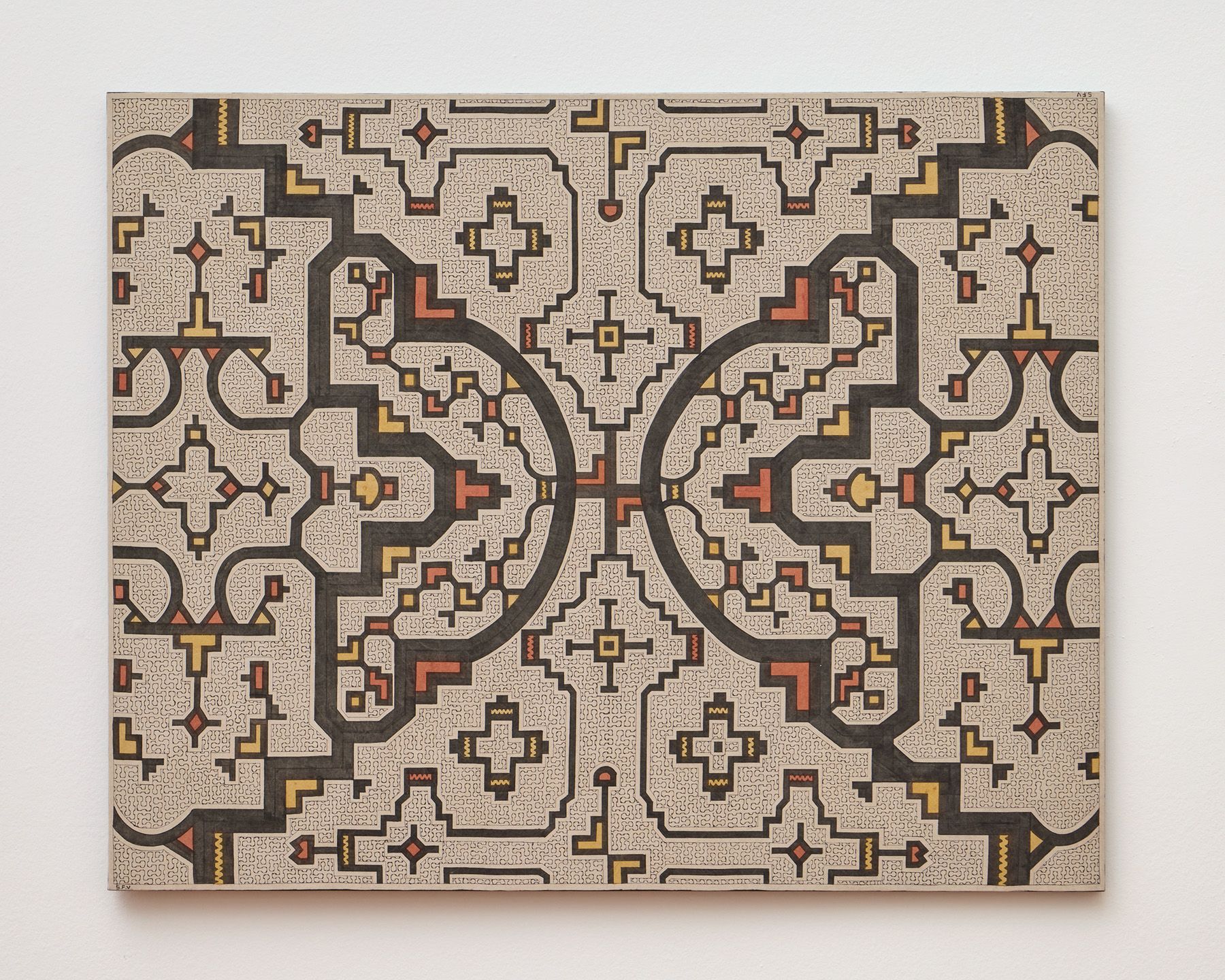
Sara Flores, Estudio para la bandera de la Nación Shipibo-Konibo-Xetebo (Maya Punté Kené) 1 / Study for Shipibo-Konibo-Xetebo Nation Flag (Maya Punté Kené) 1, 2024. Tintes naturales sobre tela 120 x 149,5 cm. Cortesia de la artista.
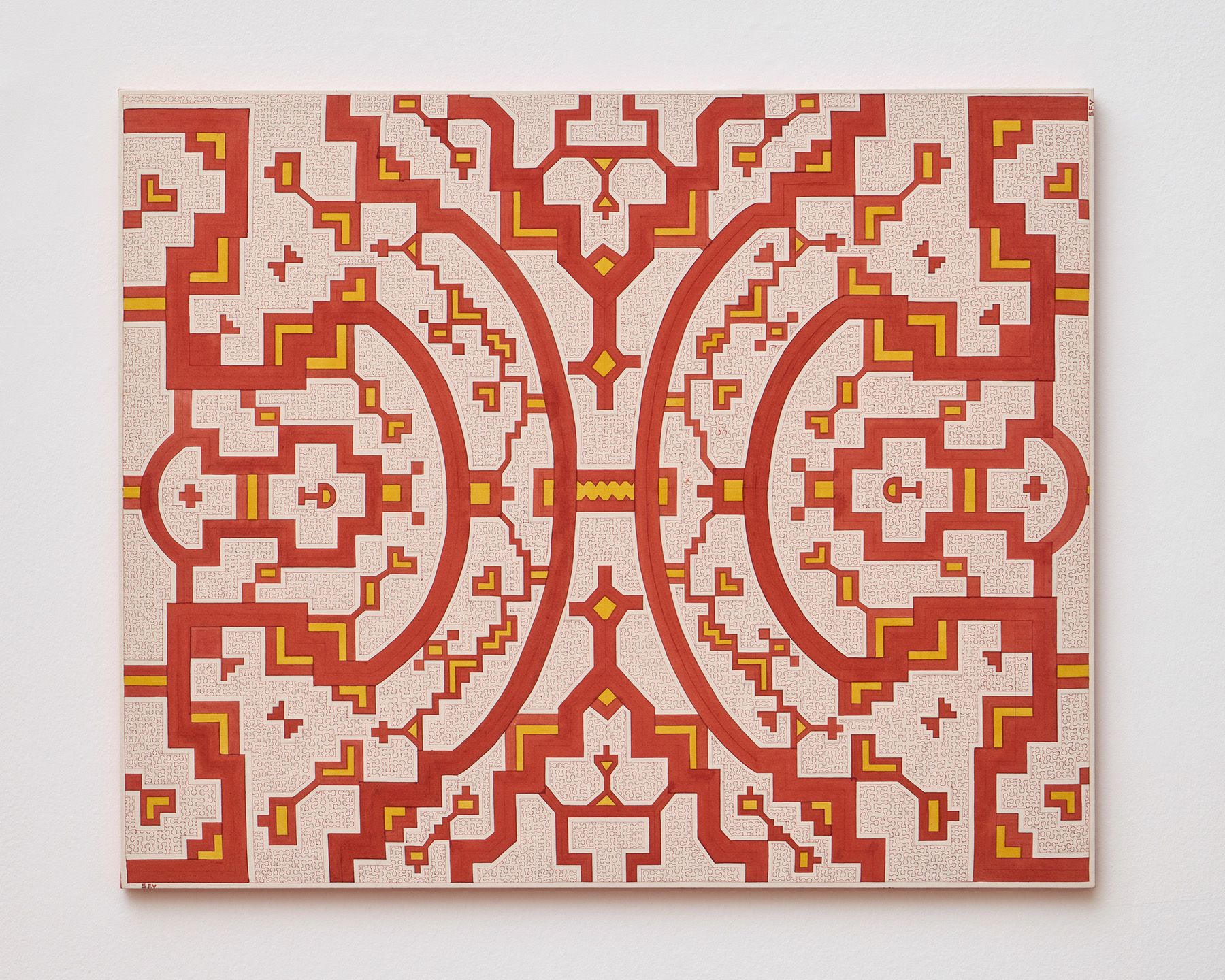
A kené artist operates through two modes: the technical menín, referring to correct designs executed with precision; and the visionary shinan, drawing from imagination, energy and dreams. “Before painting, there is a process of remaining still, so that the pattern can emerge clearly,” says Flores, explaining how the hand’s movement follows spiritual inspiration. “I open my eyes in the morning and see the designs forming on the threads of the mosquito net.”
The works in Venice demonstrate sub-styles deriving from the two geographic groups historically constituting the Ucayali River’s Shipibo-Konibo community. The straight-lined punté kené distinguished the downstream population, while the curvilinear maya kené is characteristic of those living upstream. The orderliness of kené is also thought to have a curative function - a kind of design medicine. “For us, illness is caused by disordered designs,” says Flores, “and healing consists of untangling them and replacing them with ordered patterns.”
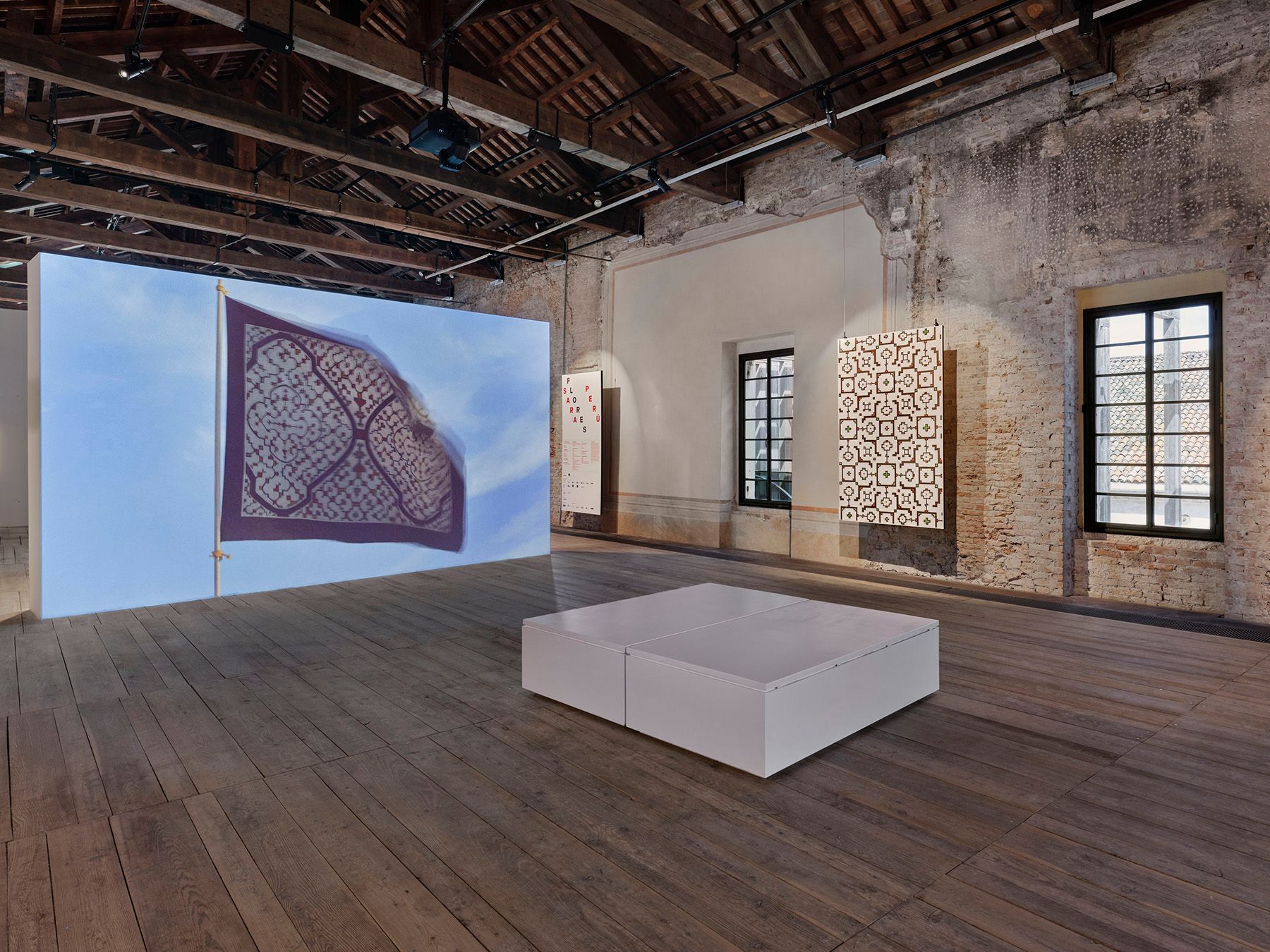
Sara Flores, From Other Worlds, Peru Pavilion, 61st Venice Biennale, 2026. Photo: White Cube (Eva Herzog)
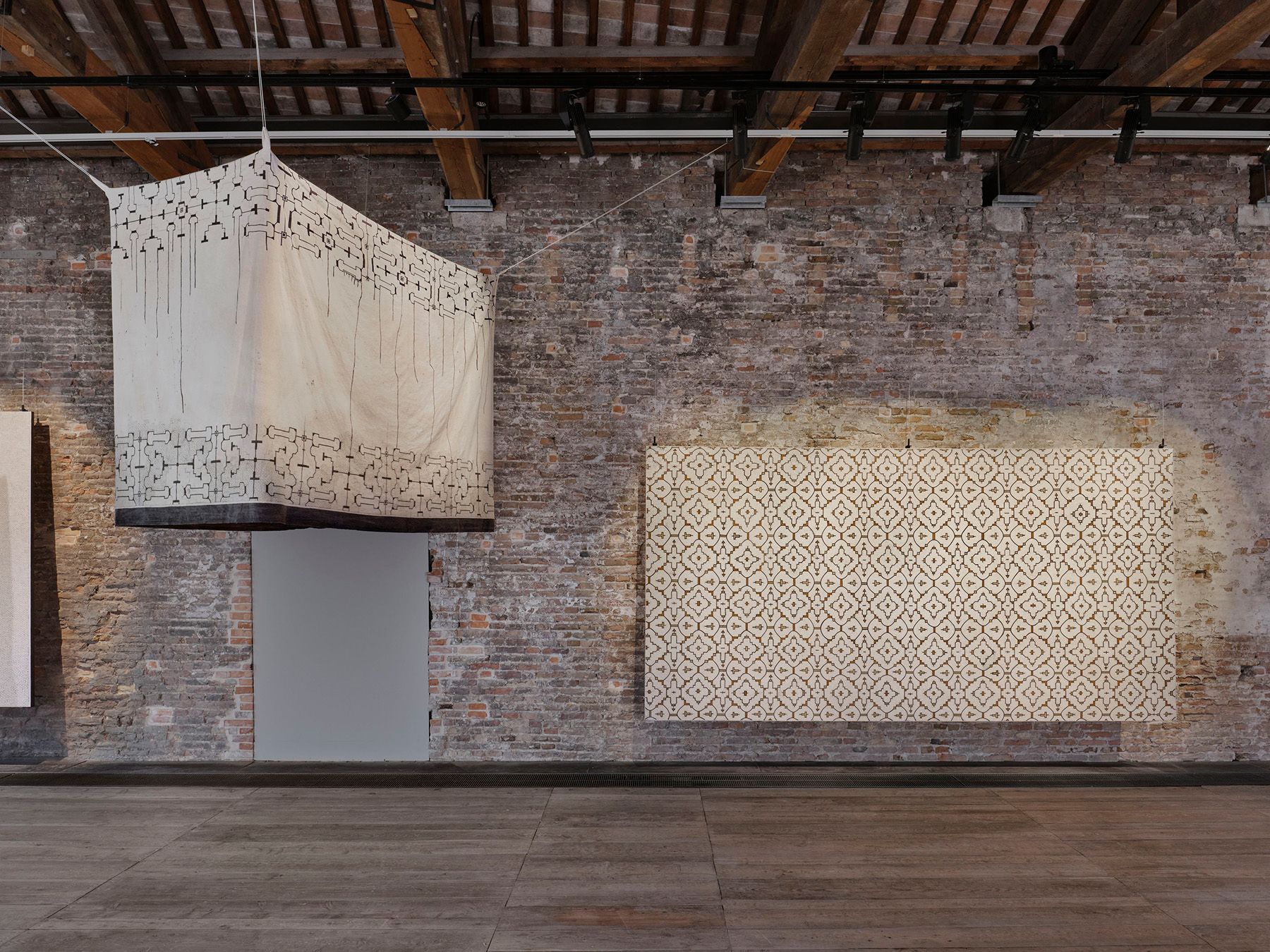
Although a vibrant practice in the Shipibo-Konibo world and declared National Cultural Heritage in 2008, kené historically lacked wider recognition in Peru, where the artist says the Indigenous experience today continues to be “marked by discrimination, cultural appropriation and the violation of rights.” Her exhibition asserts the artform as the expression of a living nation, for whom creativity, community and territory are intrinsically linked.
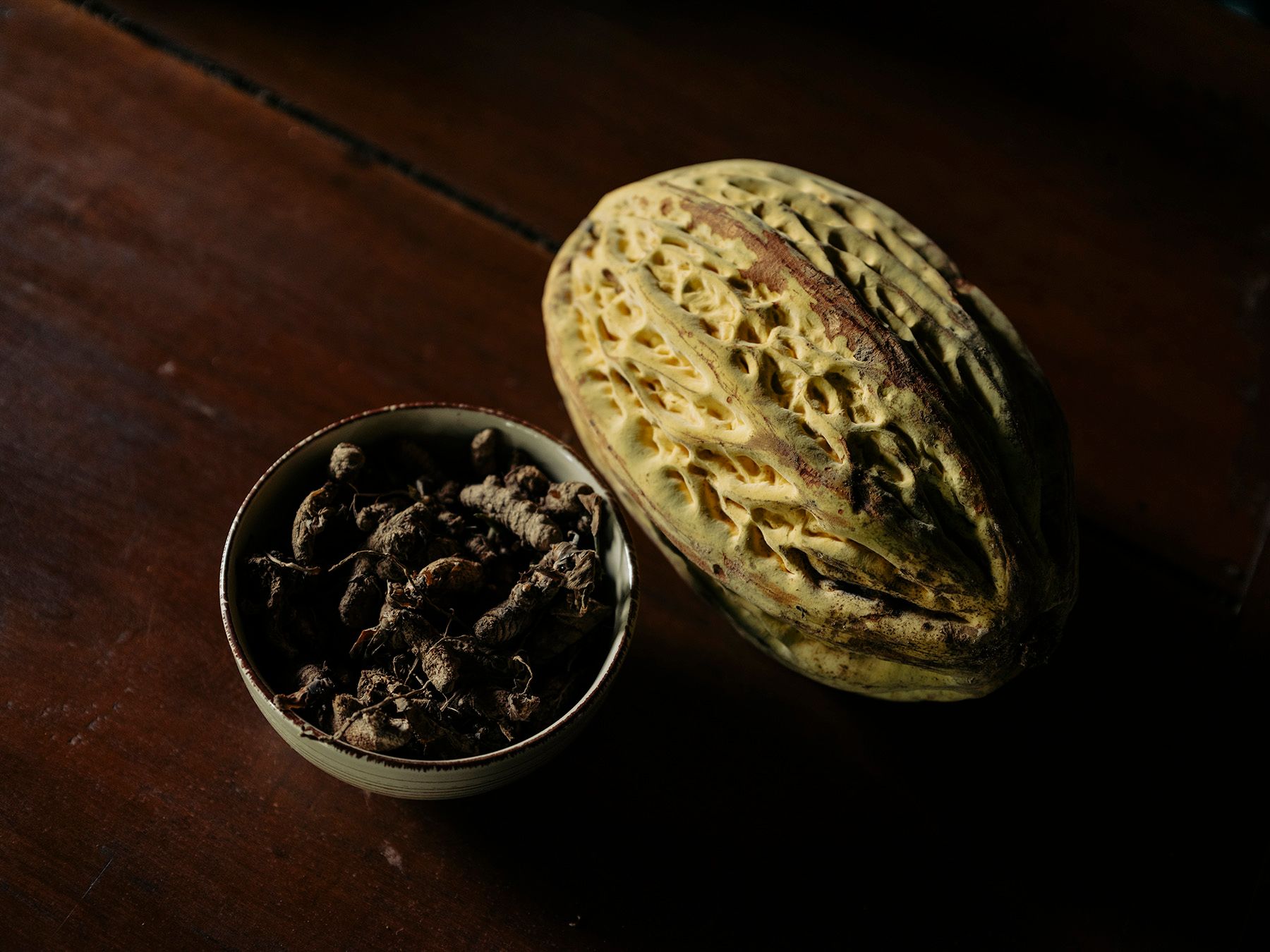
Shipibo-Konibo people have historically been resilient against colonialism, preserving their traditions against both Inca and Spanish empires. Today, their lives are under threat from devastating damage in the Amazon: deforestation, mining, oil palm and cocoa plantations. “The settler population has grown,” explains Flores. “Where there was once forest, there’s nothing left. The rivers are murky because people throw trash into the water. Plants are disappearing.”
It is the manifestation of a collective desire. We are saying: we exist, we have a nation, we have a culture, and we demand the right to decide our future.
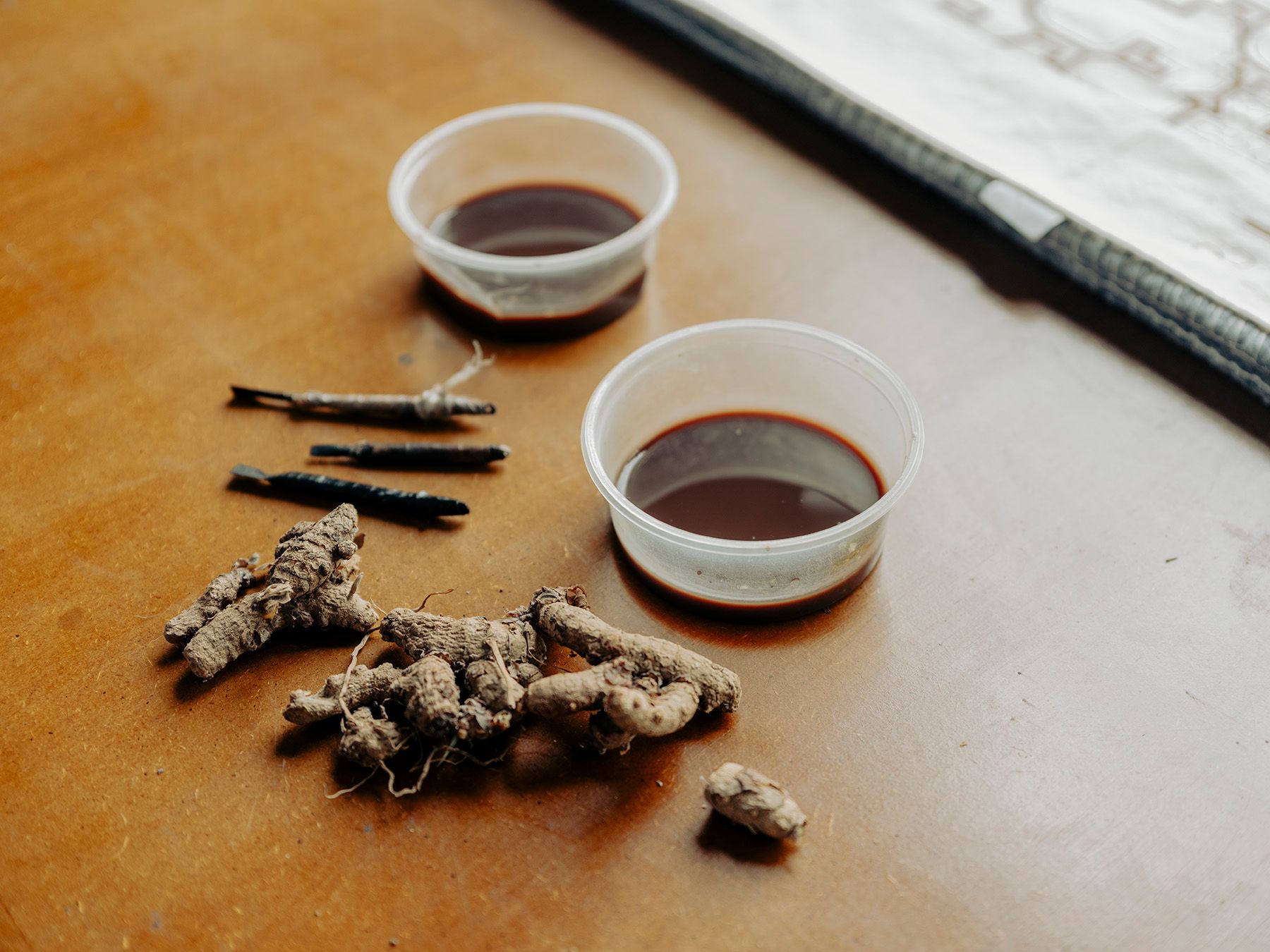
Exploitative, extractivist practices also impact artists’’working lives - and how artistic traditions might survive. “When I was a child, yacushapana—the bark we use for dyeing—grew nearby,” Flores continues. “Today, we have to travel very far in groups to find it.”
The artist’s work therefore feels inextricable from Shipibo-Konibo self-determination, most clearly in a film work at the center of her Venice display, which shows a flag painted with kené gently blowing in the wind. “It is the manifestation of a collective desire,” she explains. “We are saying: we exist, we have a nation, we have a culture, and we demand the right to decide our future.”
The 61st Venice Biennale continues in Venice, Italy until 22 November 2026.
About the author
Agnish Ray
Agnish Ray is a writer based in Madrid with a background in postcolonial and decolonial studies. He covers arts and culture for media including Frieze, Wallpaper*, Guardian, Financial Times, STIR, Canvas, ArtReview and Kinfolk, and teaches as adjunct professor at IE University in Spain.
Feature
Dalton Paula builds a contemporary quilombo called Sertão Negro
The Art Circuit in Salvador da Bahia Democratizing Exhibition Making
A Journey into the Inaugural Museum of Belizean Art
Feature
The Indigenous Sci-fi Love Story about the Climate Crisis and the Power of Language: Itu Ninu

Chavis Mármol: Thinking Manually in the Age of Artificial Intelligence