The Power of Fabulation in the Black Cinema of Zózimo Bulbul
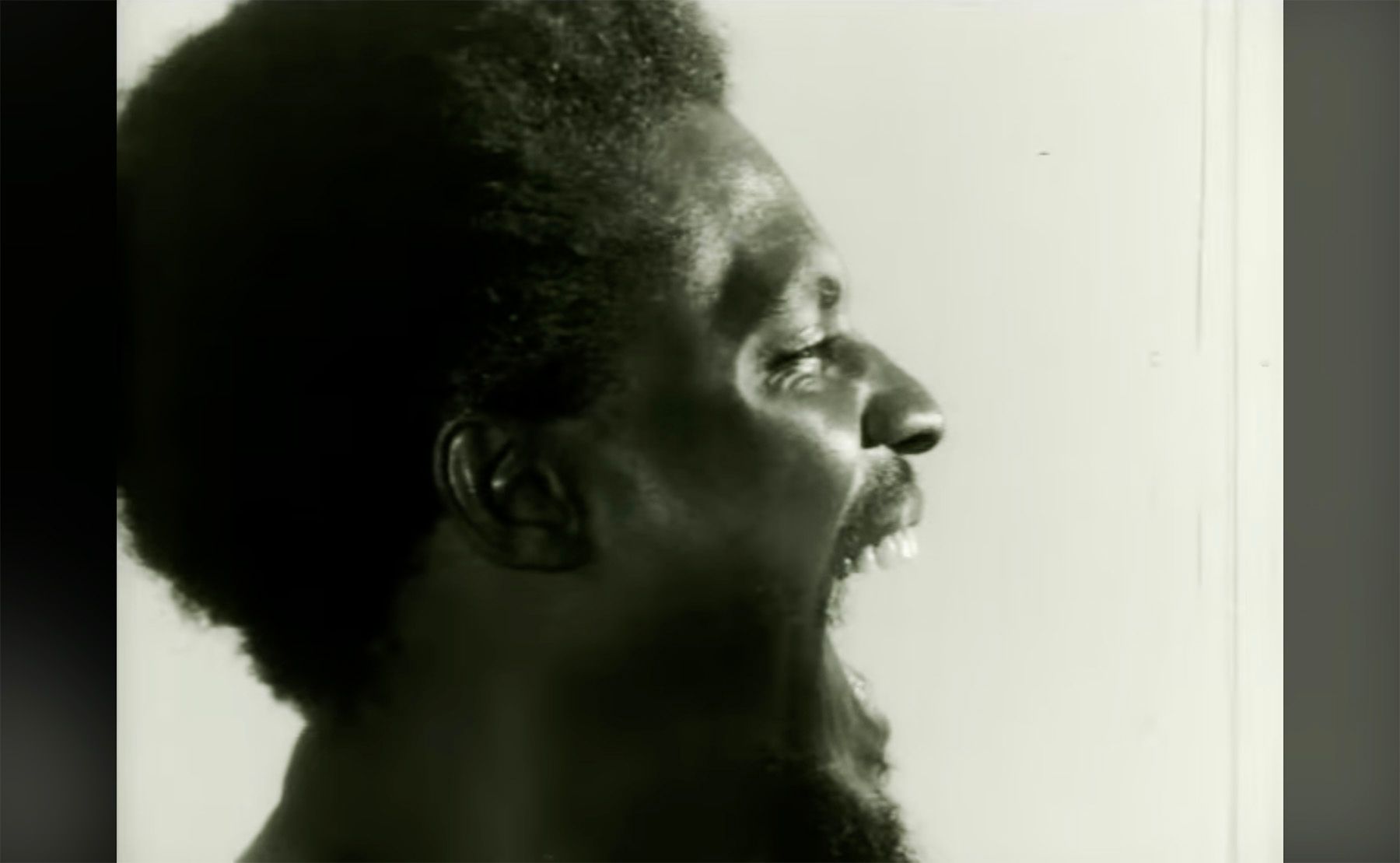
Still from the film Alma no Olho, 1974, directed by Zózimo Bulbul.
In Alma no Olho, Black Brazilian filmmaker Zózimo Bulbul creates space for an imagination beyond Western modernity, reconstructing a bodily representation that challenges racial structures.
How and why does one write a history of violence, asks historian Saidiya Hartman, relating the materiality of women’s archives during the transatlantic displacement process to accounts of the violence suffered during that journey. Hartman proposes a new reading of archives based on this same materiality, which she calls critical fabulation: reworking the narrative through the impossibility of recreating the past. In Brazil, the politics of representation have been questioned by Black artists at least since the 1970s, as they find themselves facing the abyss of fitting into the forms established by these discourses.

Still from the film Alma no Olho, 1974, directed by Zózimo Bulbul.
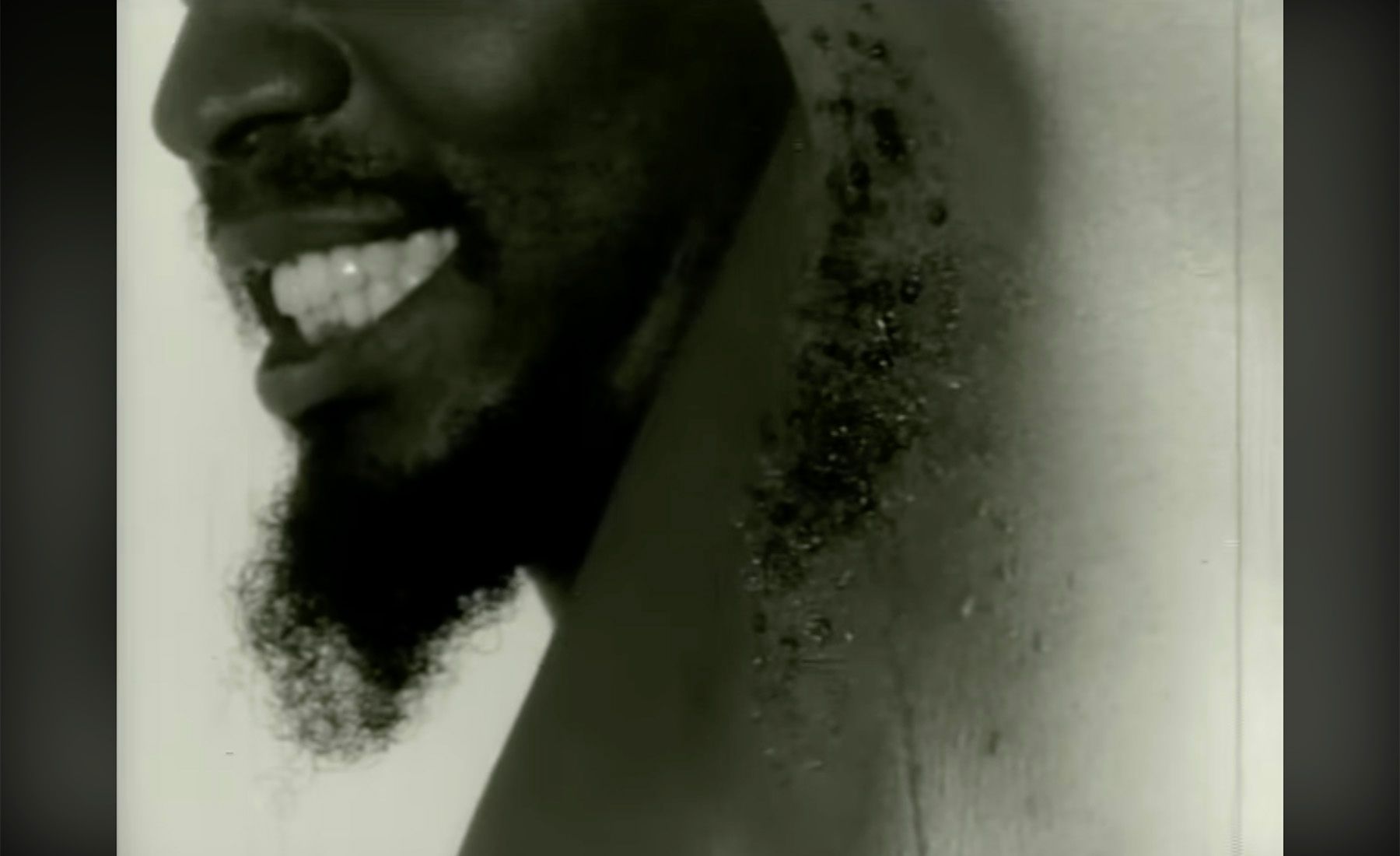
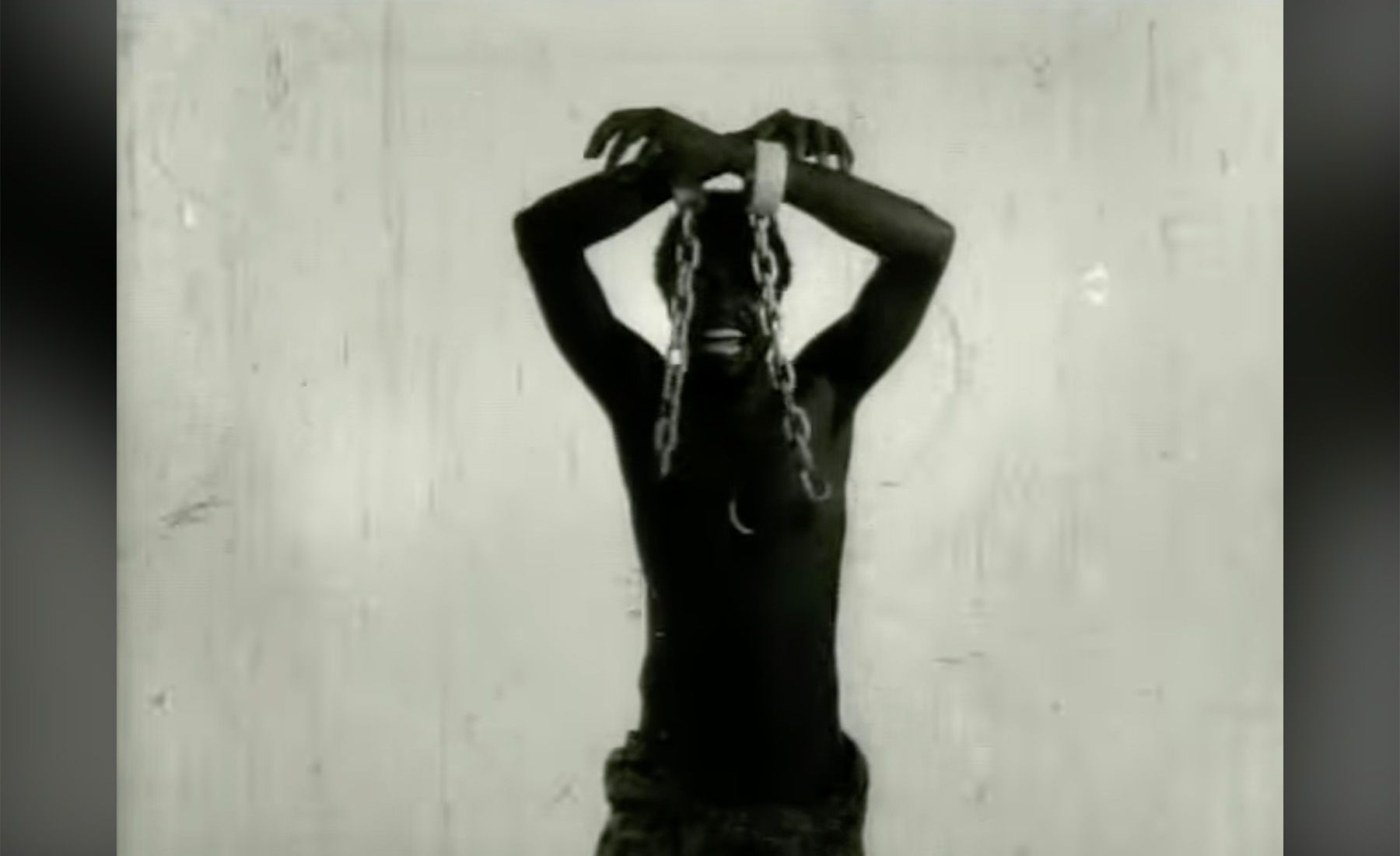
Alma no Olho (Soul in the Eye) is a film directed by Zózimo Bulbul in 1974, considered a landmark for what is understood today as Black Cinema in Brazil for challenging the politics of representation. The film begins with a close-up on Bulbul’s eyes, filling the entire frame. His eyes, which are open, begin to shift from side-to-side, opening up the narrative. Alma no Olho shows a Black body in fragments, introduced through isolated shots in the film’s opening minutes: eyes, mouth, ear, shoulders, armpits, legs, buttocks. The narrative, however, points to a totality by bringing together, in a single body, stories from four centuries of Black presence in Brazil without uttering a single word. From nudity, the protagonist then appears dressed in clothing of African origin, returns to nudity while bound in white chains, then he dons a white suit, still shackled, before finally breaking free from his chains.
Bulbul’s black-and-white narrative mobilizes to tell a story that is, in itself, already fragmented. By mixing African peoples in transit with Brazil, the trafficking of Black people caused the histories of these peoples to be lost. Simultaneously, new narratives were created, resulting in what is known as Afro-Brazilian culture.
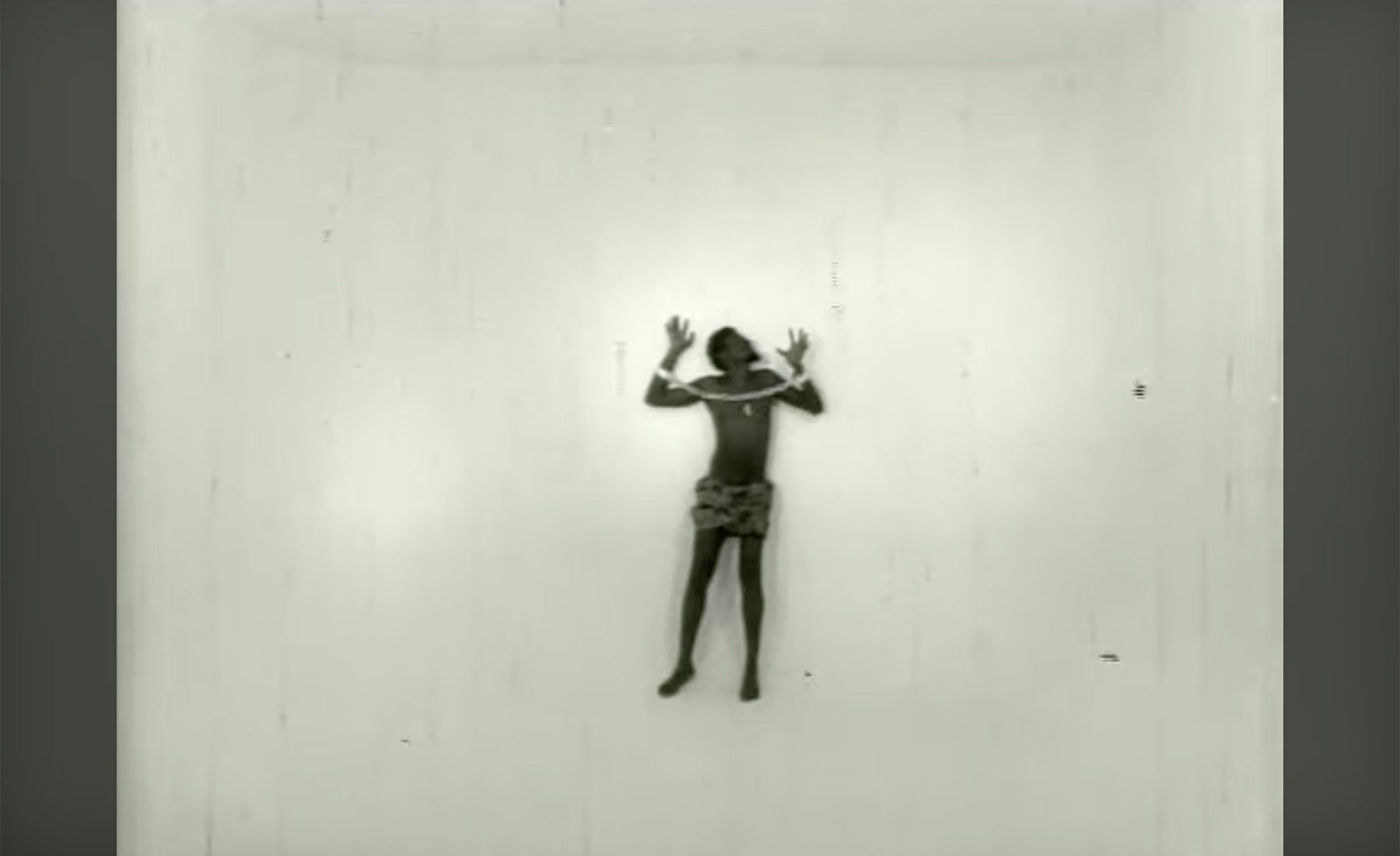
Still from the film Alma no Olho, 1974, directed by Zózimo Bulbul.
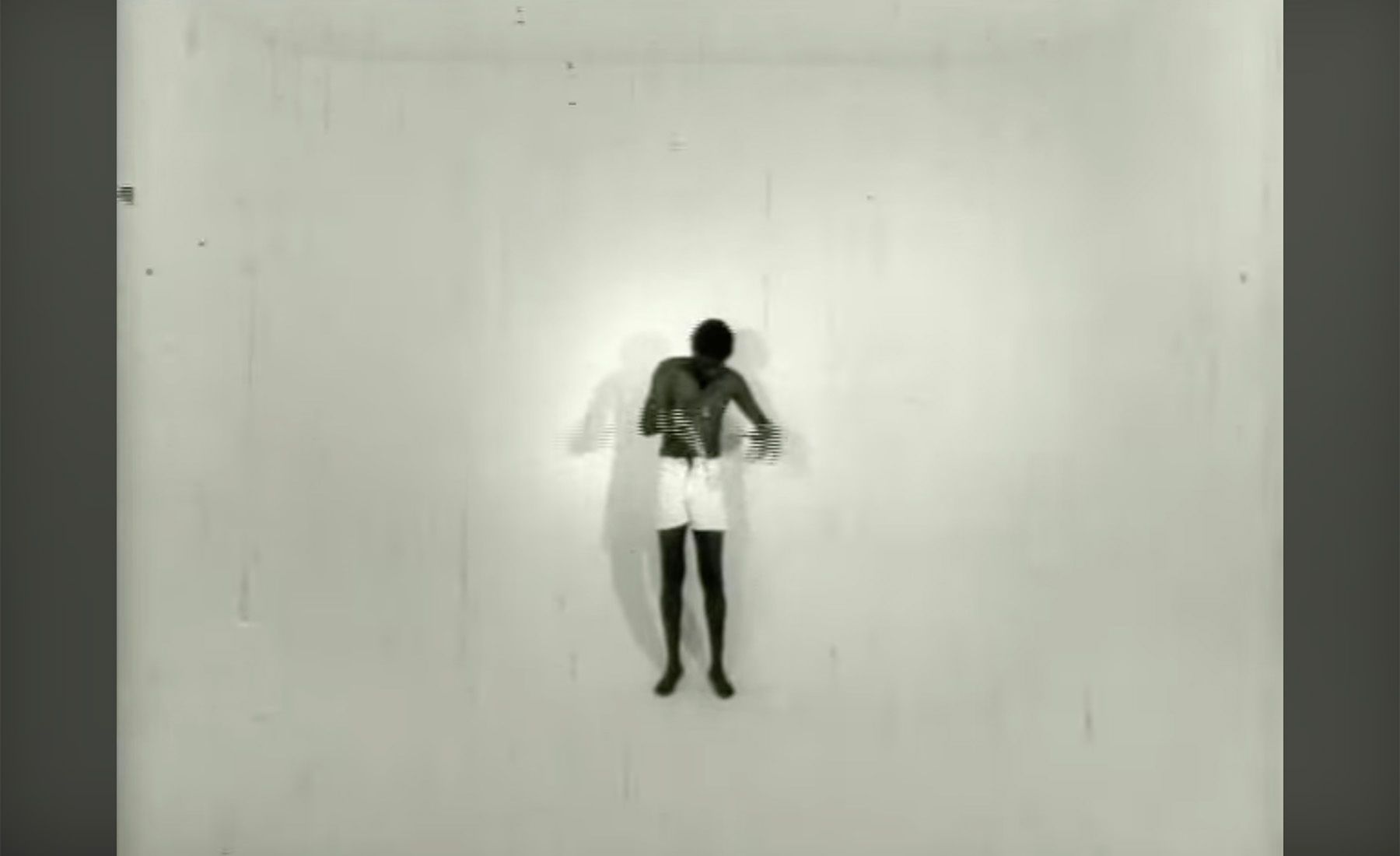
The film’s title highlights the historical opposition relegated to many Black bodies on the African continent and across the diaspora: the denial of the soul and its own existential constitution by Western thought. In the sequence where he gently touches his body, through gestures that indicate self-awareness, Zózimo invites the audience to look at his Blackness, especially as he explores fragmented features of his body and when he positions his body in a political gesture that moves in another direction, beyond the mere exposure of the body which, within modernity, is forged between the promise of savagery and the desire for eroticism.
The film’s experimentalism, therefore, constitutes an open space for creation, challenging what is perceived as reality while evoking other codes to enable new interpretations where the subject transcends the limitations imposed by whiteness. The act of imagining freedom reveals a position opposed to the continuity of racial structures, since it allows the reconstruction of the fragmented body-image—much like Denise Ferreira da Silva’s notion of pretitude (blackness) as rupture, a space where Black performance asserts itself as an insurgency against the limits imposed by modernity. According to thinkers like Leda Maria Martins or Milton Santos, for this fabulation to become evident, it must be experienced repeatedly in order to reconfigure the imaginary, not a reconfiguration within a limited space, but by understanding the multiplicities of processes that interact with one another.
Still from the film Alma no Olho, 1974, directed by Zózimo Bulbul.
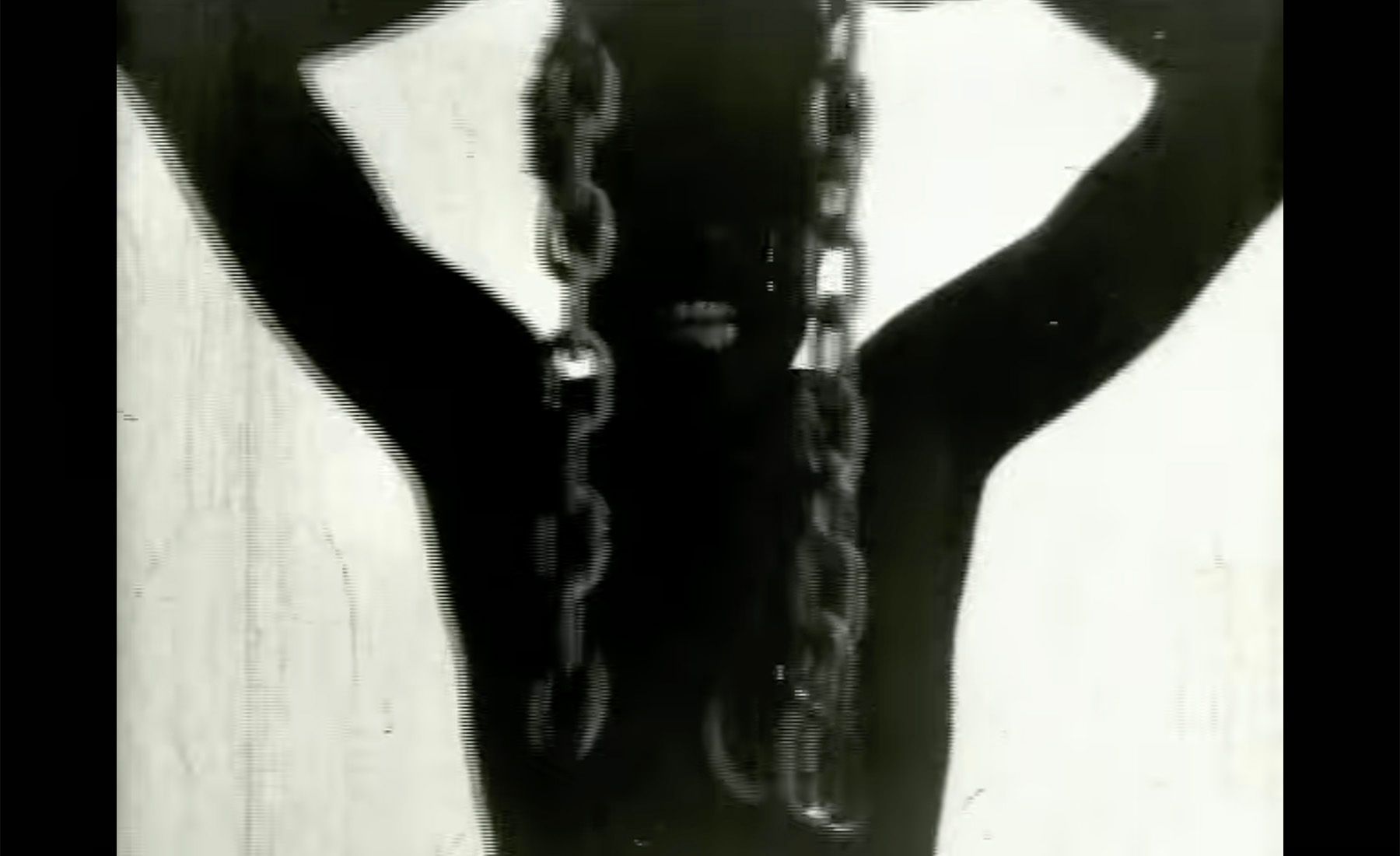
The final sequence shows Zózimo walking towards the camera. His body moves closer as he breaks the chains, a gesture that reveals a rupture with the ordered world to which he belongs, emancipating, through imagery, other ways of inscribing race within the subjective field. In this way, he elucidates another question posed by Hartman regarding how to imagine corporeality in ways that are not linked to either servitude or violence.
About the author
Kariny Martins
Kariny Martins (Rio de Janeiro, 1995) is a PhD candidate in Communication (PPGCOM/UFF), a screenwriter and audiovisual curator. She is the author of the book Ficção especulativa no Cinema Negro brasileiro (“Speculative Fiction in Black Brazilian Cinema”, 2023).
Feature

The Indigenous Sci-fi Love Story about the Climate Crisis and the Power of Language: Itu Ninu

Chavis Mármol: Thinking Manually in the Age of Artificial Intelligence

Archivo Honduras Cuir: The Art of Trans Life and Friendship in Central America
Feature
Iahra: Addressing Marine Ecology Through Industrial Materialities
The Convergence of African and Indian Lives in Kelly Sinnapah Mary’s Paintings