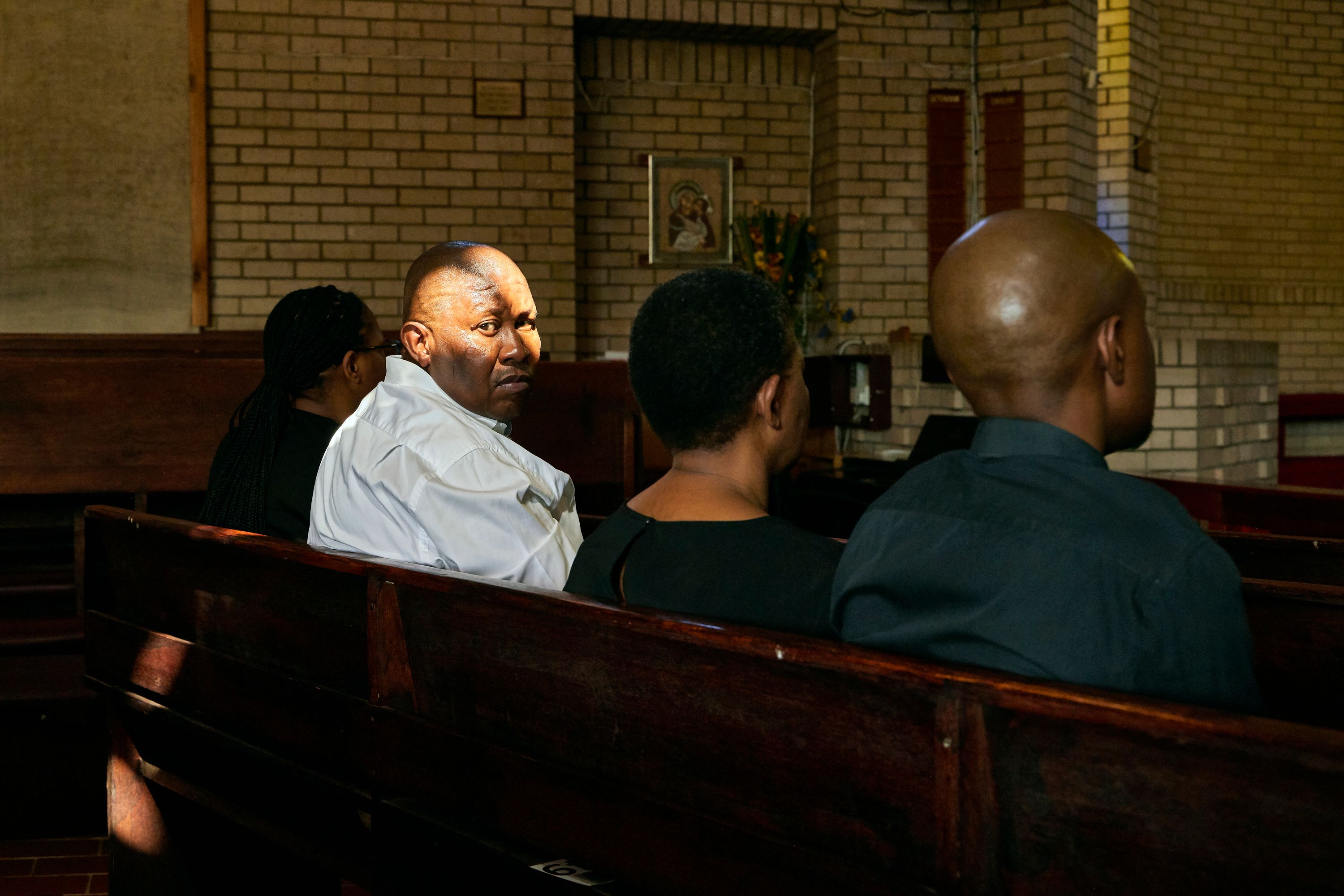
Living In Between: Mallory Lowe Mpoka’s Placemaking Practice
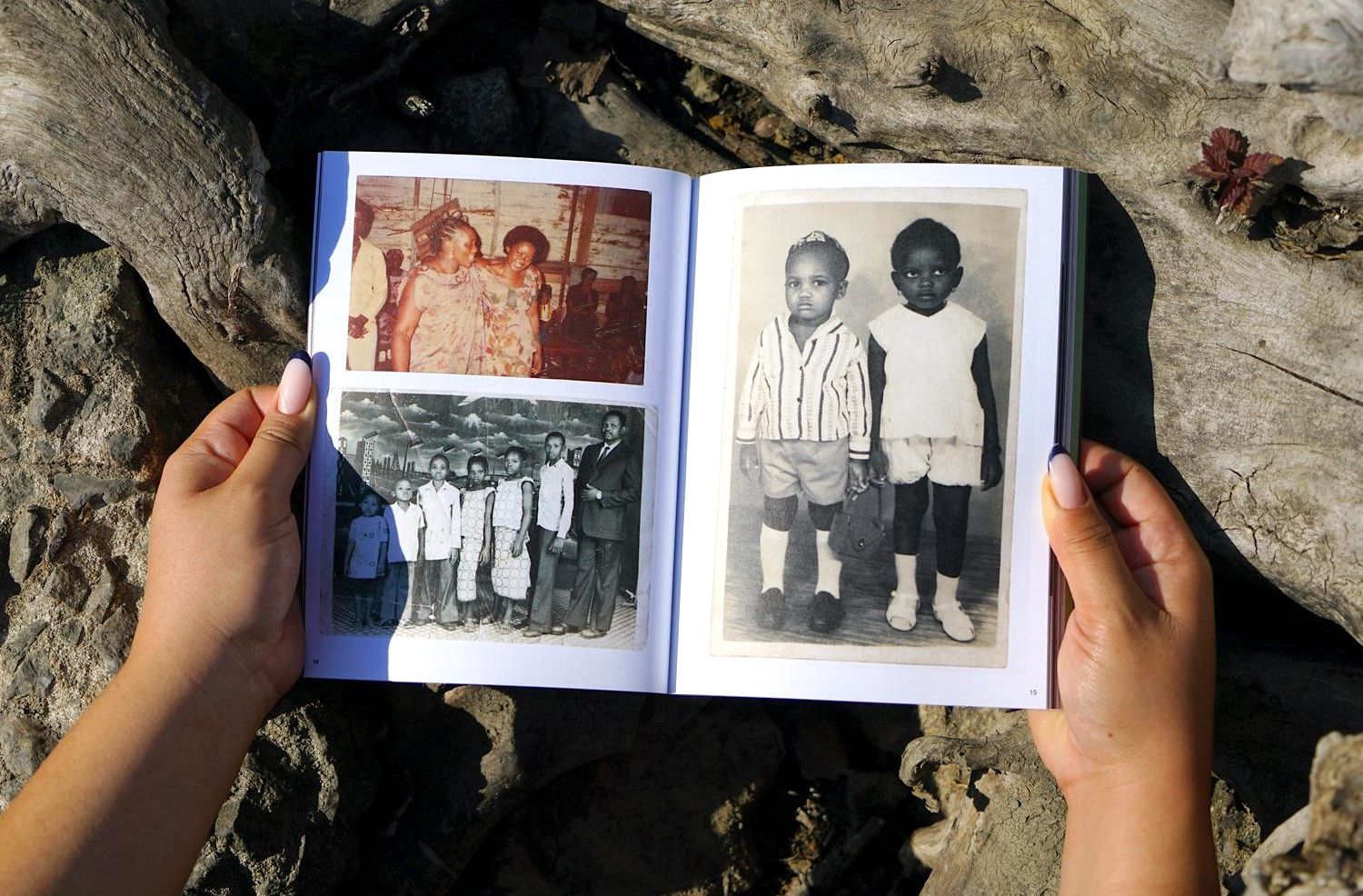
Architecture of the Self: What Lives Within Us. Publication; 5.9 × 7.9 in.; 166 pages; English/French. Montreal, 2024. Photograph by Andy Maple.
Archives, like gardens, reveal themselves through time and witness, according to artist Mallory Lowe Mpoka. Working with family photographs, repurposed textiles, Cameroonian red soil, and seeds exchanged across borders, she builds sites of belonging from memory and living matter. Writer Safia Siad traces Mpoka's placemaking practice, from matrilineal knowledge and ancestral plant wisdom to the persistence of life in the ruins of abandoned homes.
In autumn of 2025, I visited the MOMENTA Biennale d'art contemporain in Montreal to witness The Matriarch: Unraveled Threads, an installation by artist Mallory Lowe Mpoka who guided me through the experience. More recently, we sat together again ahead of her travels to Les Rencontres d'Arles where she was named winner of the 2026 Prix de la Photo Madame Figaro Arles, and received the Public Award for the Prix Découverte 2026 Fondation Louis Roederer. Discussing her life and artistic practice Mpoka weaved through themes of nomadic longing and finding beauty in liminal spaces. We lingered on ideas of interconnectedness and the way her projects organically overlap and grow together. I found resonance as a person of varied origin and kinship in the ways she embodies her journeys—making home a sensorial experience that can be reached for, and finding the tangible in the intangible.
Mpoka’s artistic practice moves effortlessly across mediums and through themes of matrilineality, land stewardship, ancestral plant knowledge, archive, and memory. The artist is the eldest daughter of a Belgian mother and Cameroonian father, and was raised in Montreal. In the echoes of global pandemic stillness, she felt called to spend time in Cameroon with her family. Over three years, she visited her grandmother intermittently, going through photographic archives and developing work anchored in Cameroonian landscapes.
This period was deeply nourishing for Mpoka who began working with the clay rich ferralitic red soil and red pigment that is found in the highlands of West Cameroon. Her family runs a textile shop in Douala, a space inherited from her grandfather who began the business to sell shoes and bags in Douala’s central market. Mpoka’s sensibility for materiality, manual labor, and testing the boundaries of textile comes from this familial history. After the passing of her grandmother in 2024, Mpoka was nominated to be the matriarch of her family; a practice woven within Bamileke tradition. Extending beyond familial leadership, this role is one of stewardship of cultural knowledge, memory, and social ties, carrying the lineage forward. This process allows the living to assume responsibilities toward both those who came before and those who will follow—a role that Mpoka thinks deeply about as she moves through her life and artistic work.
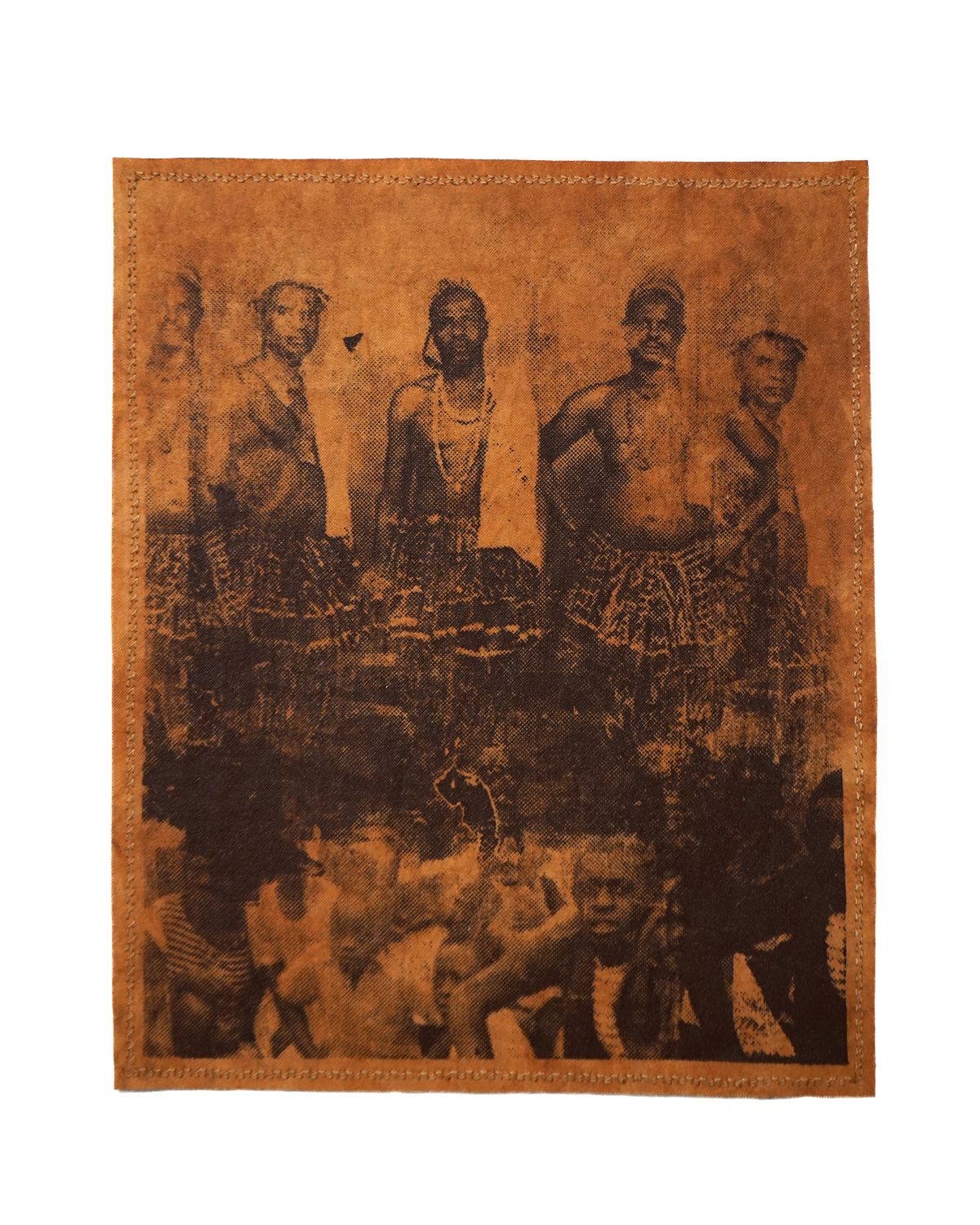
The Matriarch: Unraveled Threads, detail view, recycled cotton, laterite pigment, acrylic, and screen printing, 2023. Courtesy of the artist.
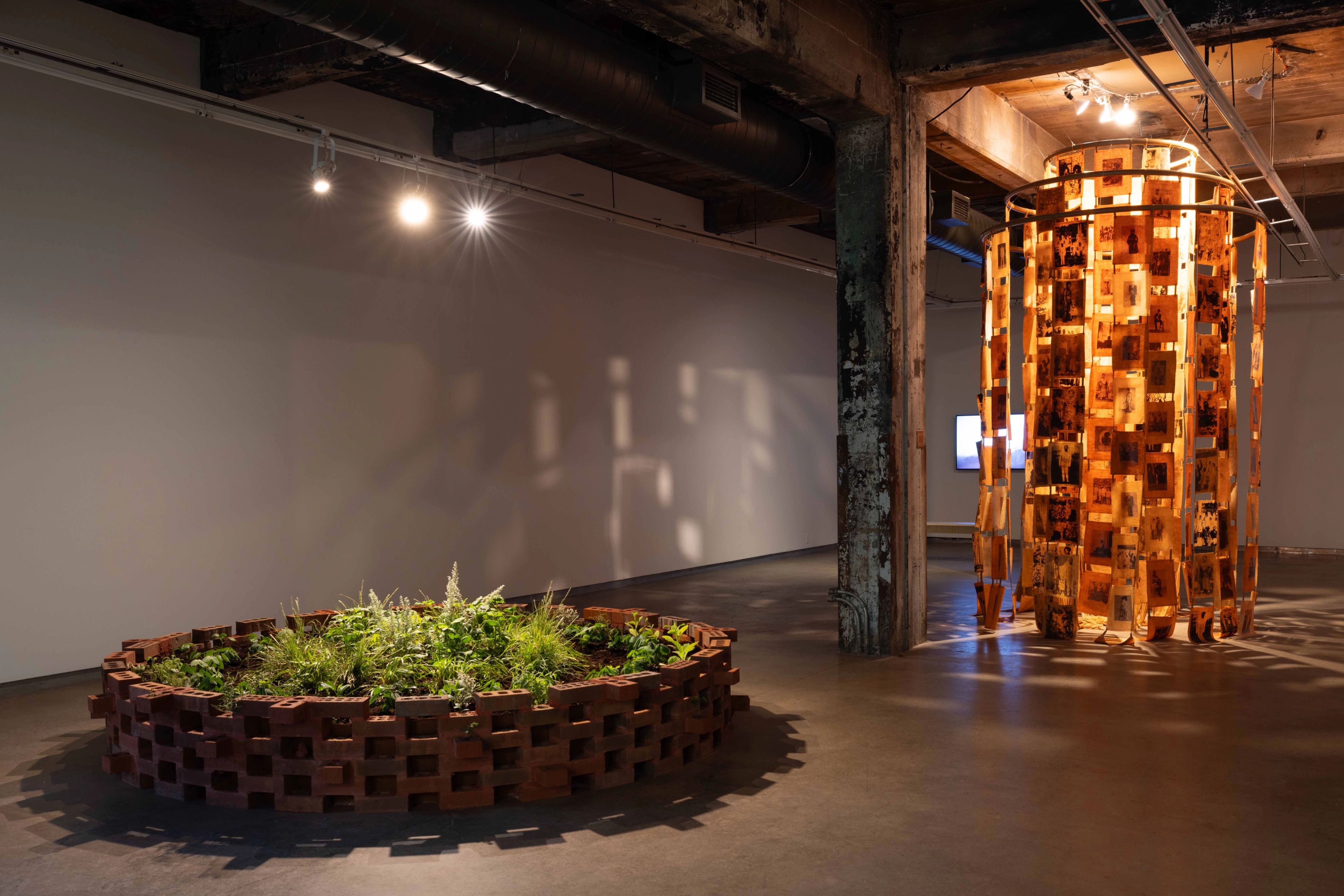
The Matriarch: Unraveled Threads (2021-2024) is a large sculptural project composed of over three hundred panels made of recycled linen and cotton repurposed from her family’s sewing workshop and hung from three large steel hoops. Screen-printed and transferred on each panel are various images from her historical family archive alongside self-portraits; collapsing time and creating a nonlinearfamily tree. A large circular structure gesturing toward Mousgoum and Sudano-Sahelian Indigenous architecture, is illuminated from within. At MOMENTA, Mpoka installed the structure beside a newer work titled Deborah’s Garden (2025). Here, she created another circular structure, this time from red brick reminiscent of the clay found in Cameroon. Growing in this iteration of her ongoing garden were native plants from Cameroon, Senegal, and Canada, containing species traditionally used for medicinal and spiritual healing, including sweetgrass, sorrel, indigo and kinkéliba.
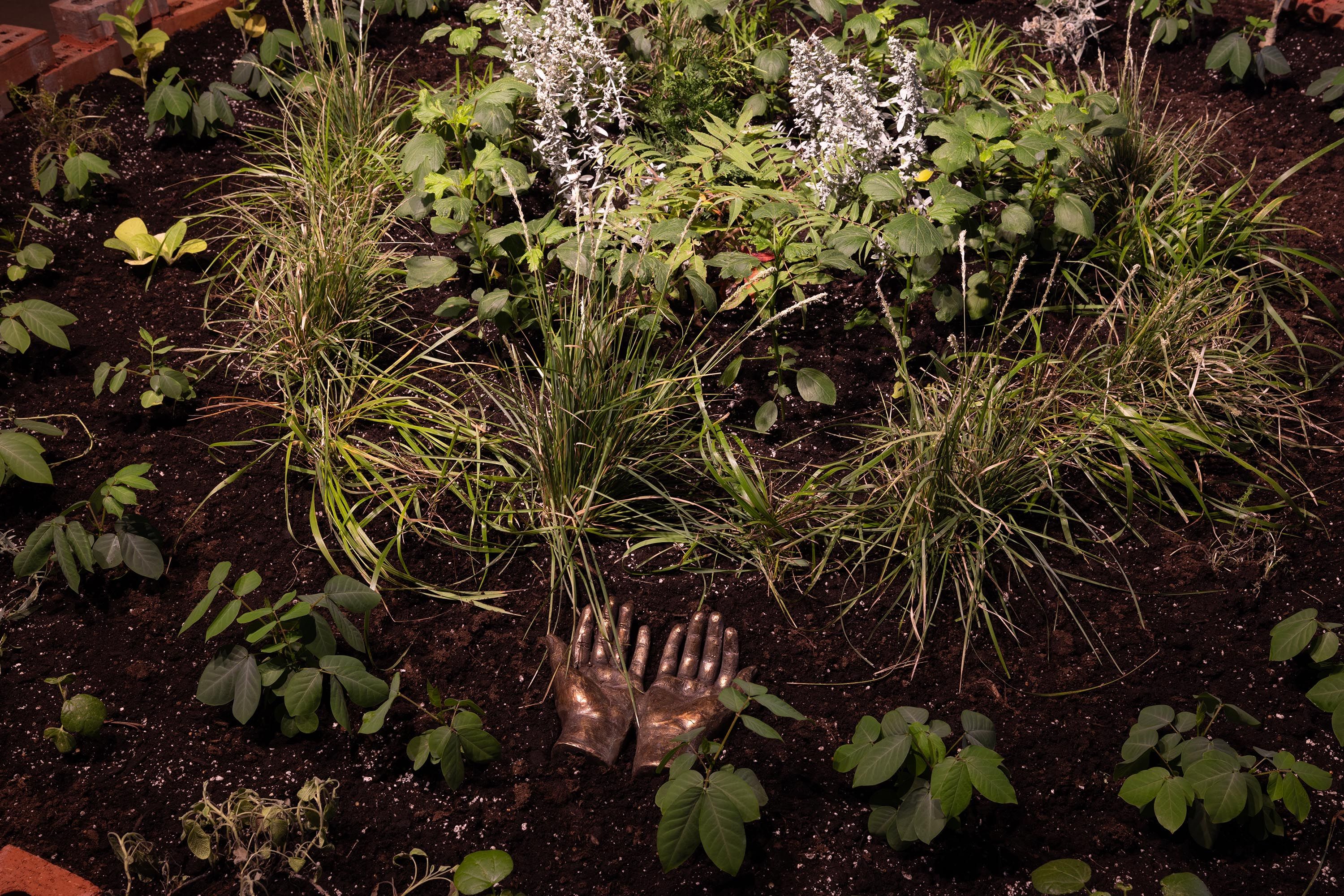
Throughout her practice, Mpoka is thinking about the ravages of colonial environmentalism, land extraction, and biocolonialism. In this work, plants grow from seeds that were shared, collected, and moved across borders, allowing a sense of agency. Mpoka gathered seeds from her aunties in Senegal and Cameroon, as well as Black and Indigenous friends in Montreal, over the course of three years. Within the larger sculpture are two red bronze sculptures, Buried Seed I and II which are cast from Mpoka’s face and open palms facing upward, acting as an intimate invitation to the work. These sculptures were created in the workshop of bronze master Makhone Diop in Dakar, Senegal. The garden invited all of the senses with a thirty-minute soundscape of vernacular recordings including folk chants reminiscent of the songs sung by Cameroonian women during manual labor. Mpoka adds dimension through the olfactory, infusing vetiver, patchouli, and myrrh in her installations reminiscent of the humid red soil in her family’s village in West Cameroon. By planting, tending to, and caring for this garden, Mpoka is intentionally placemaking. In creating a physical site of belonging through memory, care, and space, she gathers fragments of places that have shaped her identity. For the artist, home is an emotional sense of familiarity rather than a fixed geography. Cultivating the garden became a way of creating that feeling of home by way of living matter.
Throughout her practice, Mpoka is thinking about the ravages of colonial environmentalism, land extraction, and biocolonialism. In this work, plants grow from seeds that were shared, collected, and moved across borders, allowing a sense of agency.
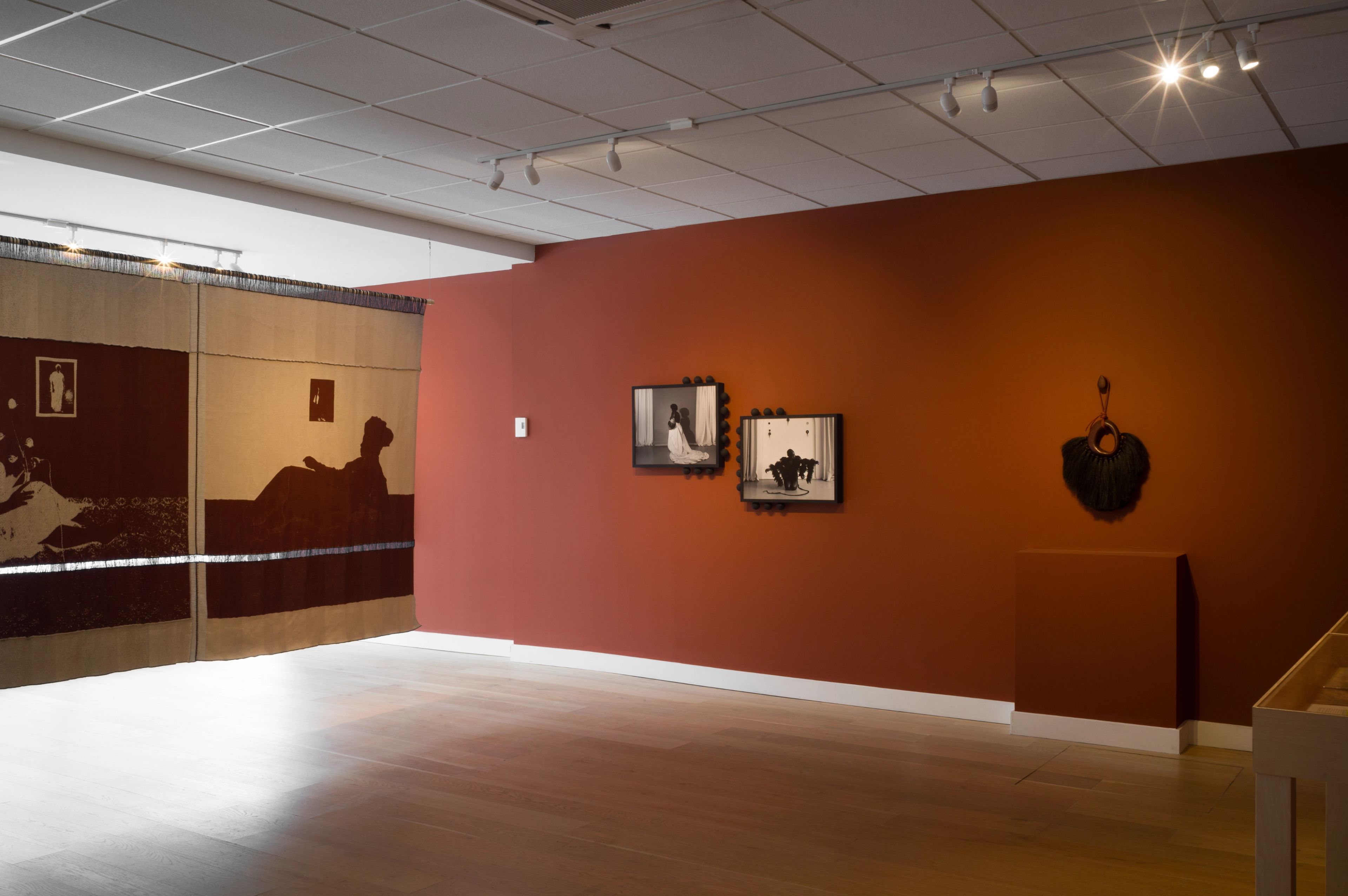
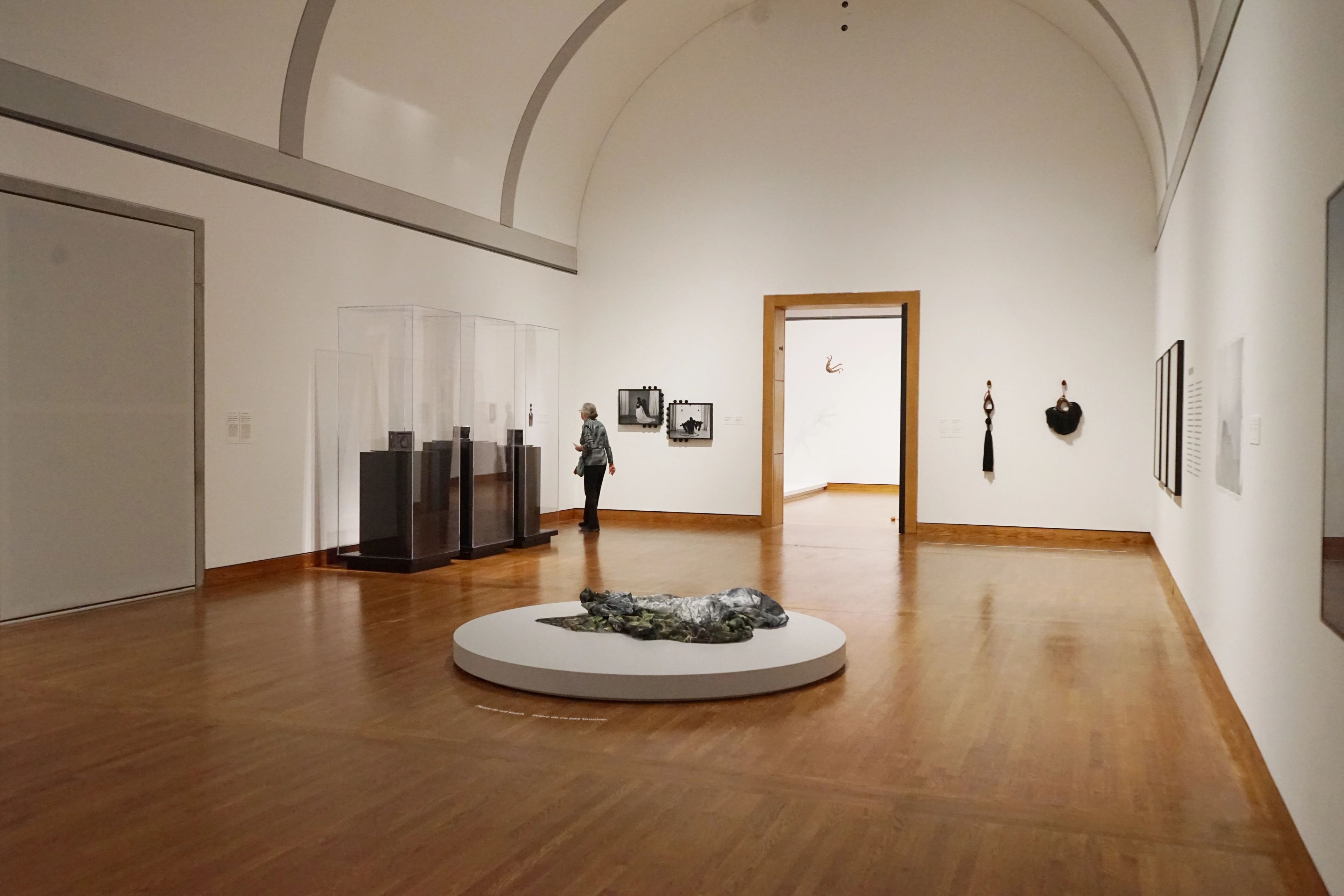
Mpoka continued her creation of self-portraiture with the work Alter-Egos (2023), an image that appears as part of her more recent work In the Weft of Memory (2025). Gesturing toward the Cameroonian studio photography that marked the complicated post-independence era of the 1970s, the artist appears twice in this diptych, sitting on floral tapestries in front of framed family photographs from the 1960s. On the left, she is dressed in white and faces an image of her grandmother wearing white church attire. On the right, she wears a black boubou and poses before another photograph of her grandmother, again matching her dress.
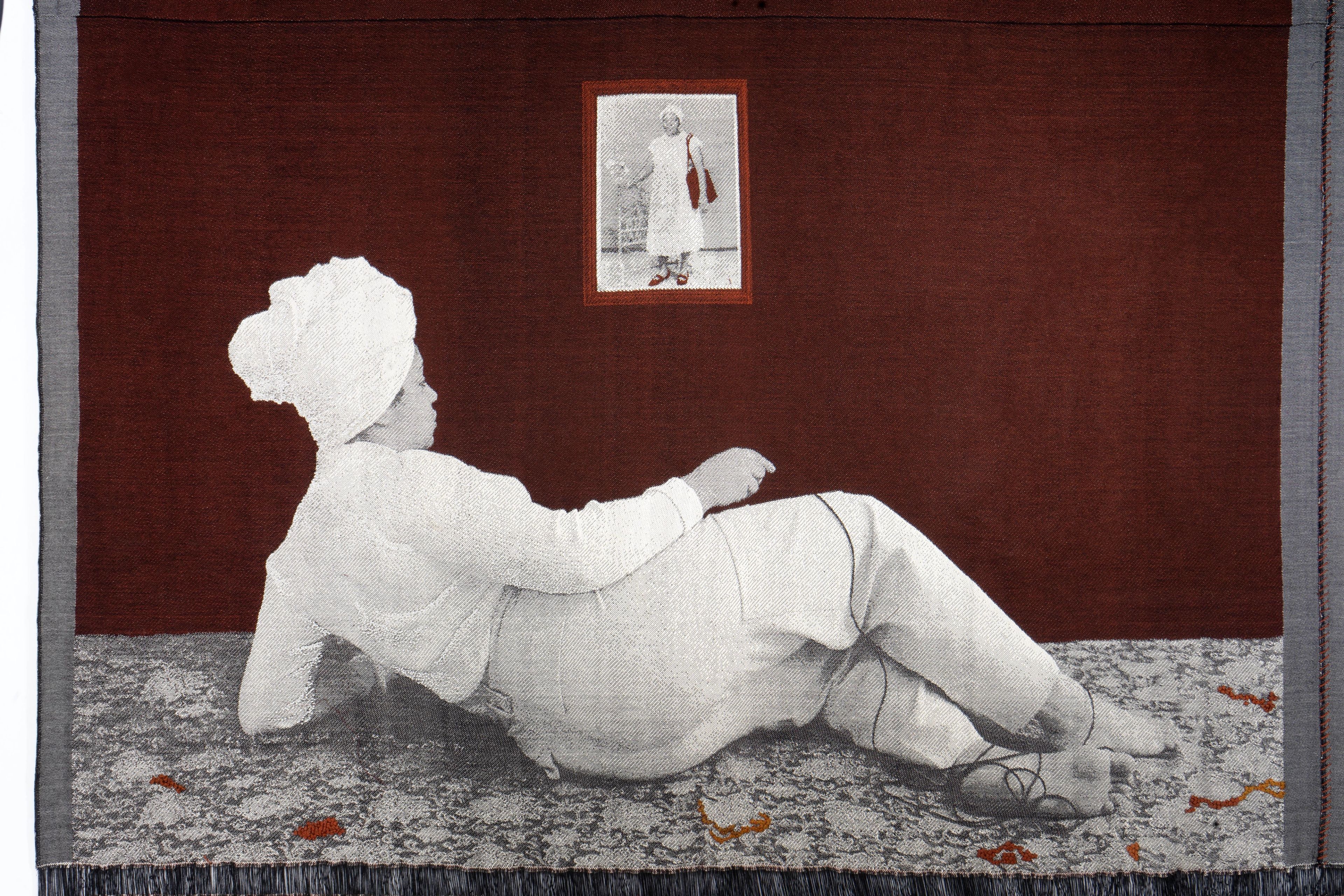
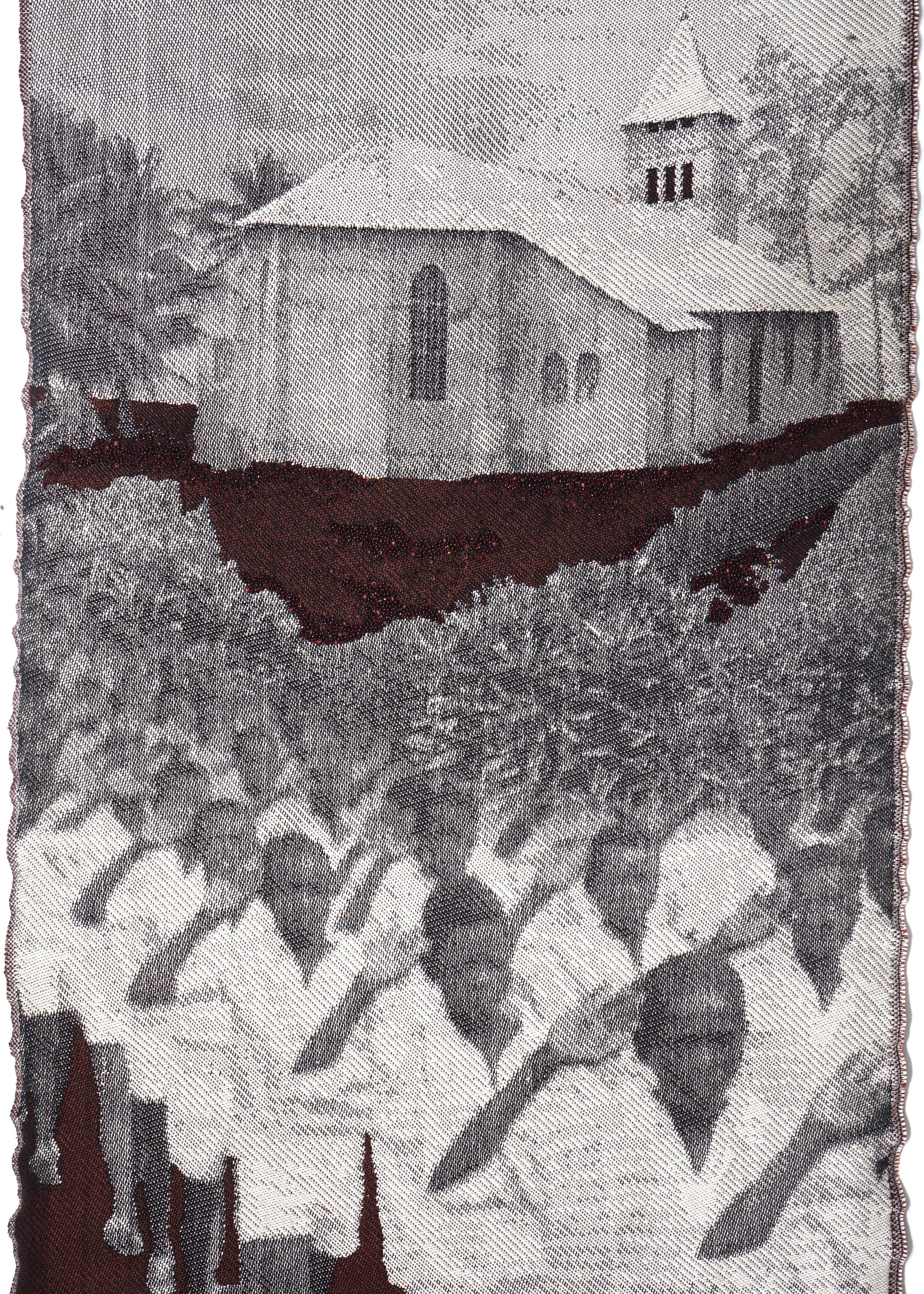
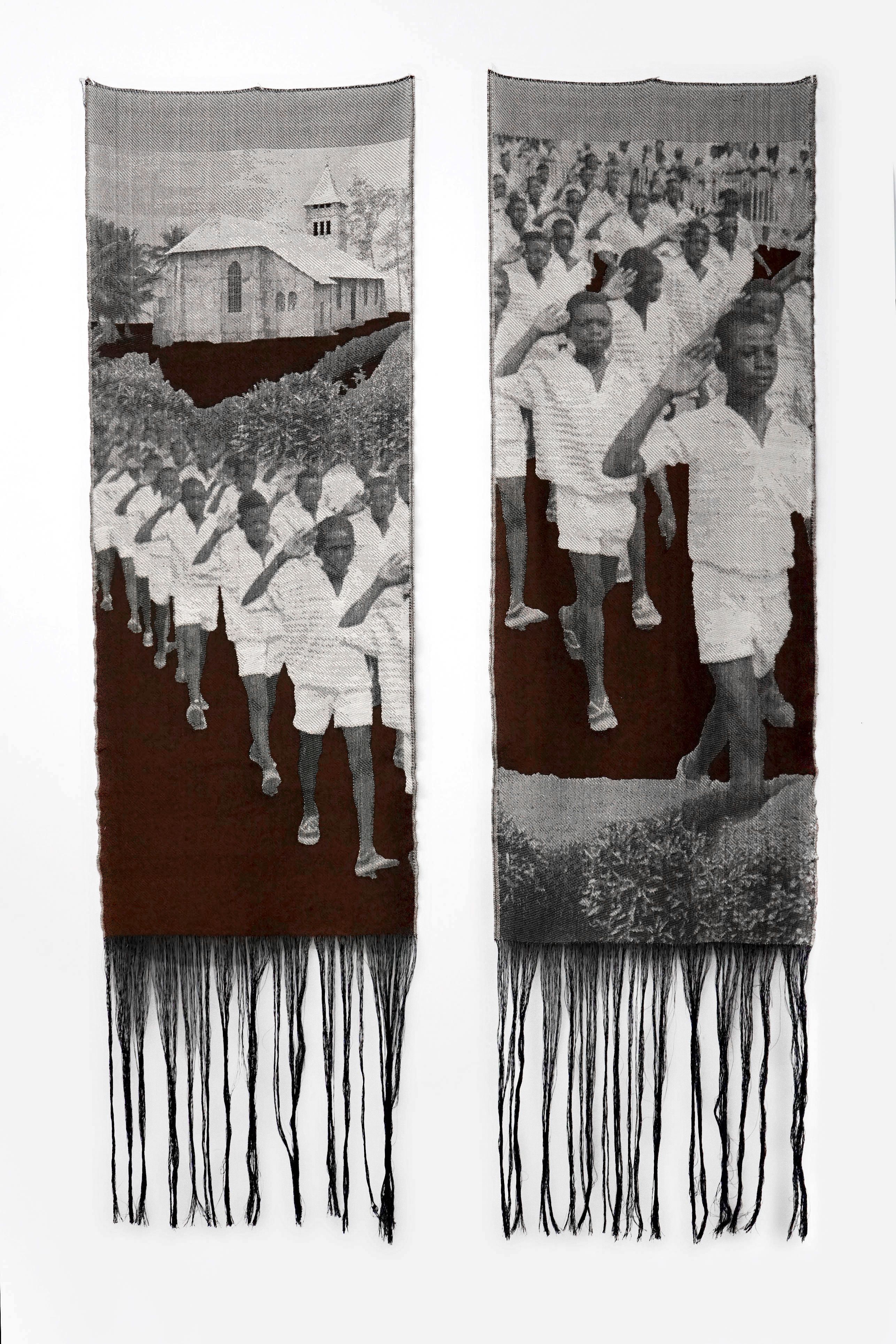
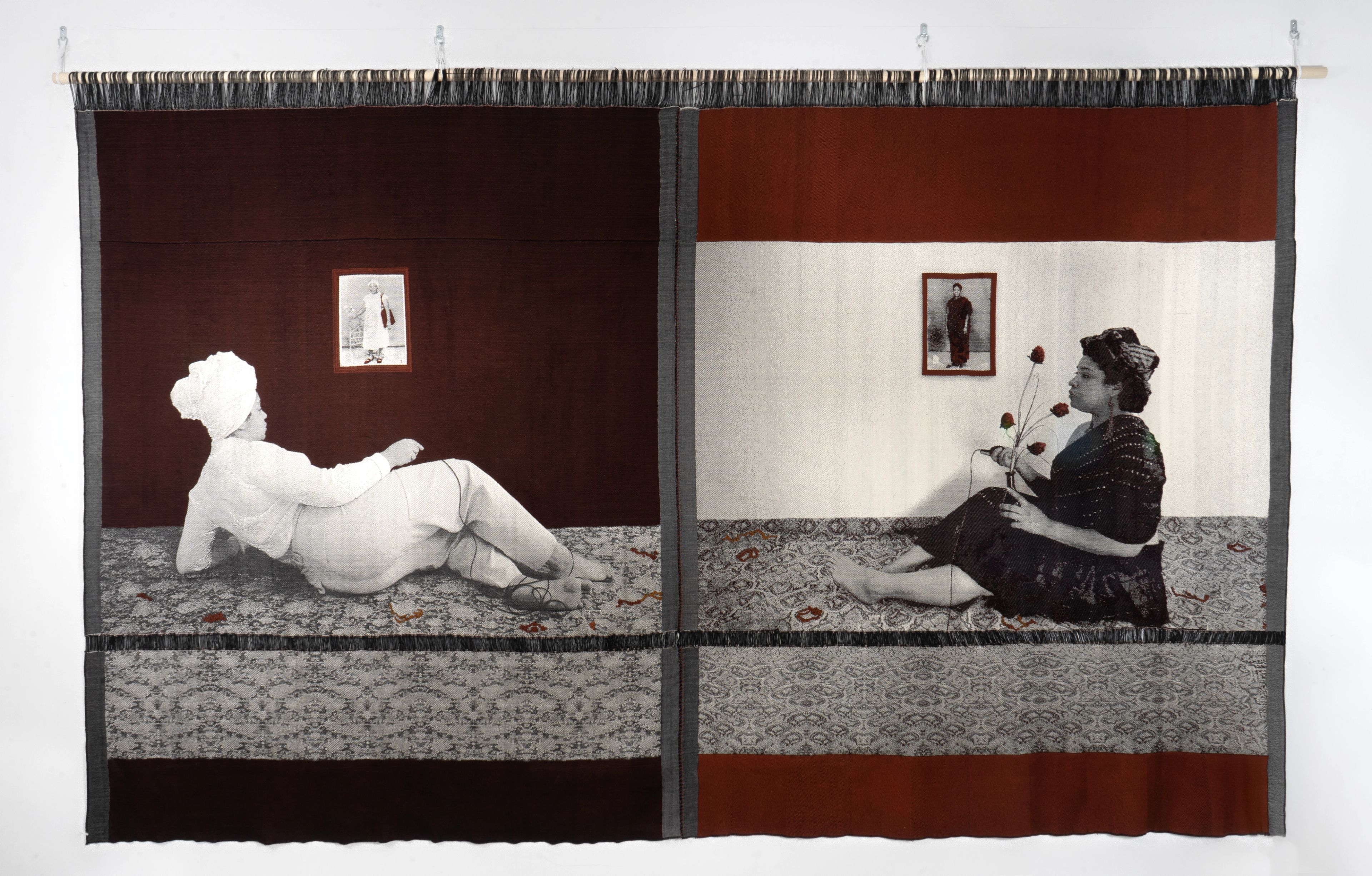
The images are woven into tapestry, adding new dimension with her choice of material. The glass beadwork continues to layer depth to the images. Much like memory itself, Mpoka’s works change shape over time, allowing for new embodied sensibilities.
On a walk during one of her visits to Cameroon, Mpoka began photographing the remains of homes that were either abandoned or tied up in land disputes, finding solace in these halfway spaces. The homes, often empty and sometimes reduced to piles of brick, incite a tangible feeling of liminality, always in between geographies. Mpoka is struck by the relationship between notions of home and the natural world. In these spaces of abandonment, the earth not only persists but often reclaims these homes. The resilience of plant life amidst the rubble of human-made structures offers new ways of thinking through how the land will always continue to hold and sustain life. These images represent the living that occurs while we are neither here nor there, and the artist proposes that we feel deeply into these spaces.
As she moves into new work, Mpoka is unbound by medium. She continues to parse through photographic archives, expanding images through jacquard weaving, beadwork, installation, film, and ceramics. Mpoka’s work is a reminder that archives, like gardens, require witness and time as they reveal themselves.
Mpoka’s work is a reminder that archives, like gardens, require witness and time as they reveal themselves.
About the author
Safia Siad
Safia Siad is a curator, art historian, and DJ with a practice centered in deep listening.
Feature
A Cohort of Artists Reconfiguring AI’s Memories
Situating AI: Conversations on African Ecosystems
The Artist Residency Centre (ARC) in Botswana
Feature
Seed Archives: Thabo Weaves a Cocoon for Listening
Naafia Naahemaa: What Appears Solid Is Already In Motion