Picha and The Lubumbashi Biennale: Sustaining Artistic Infrastructures
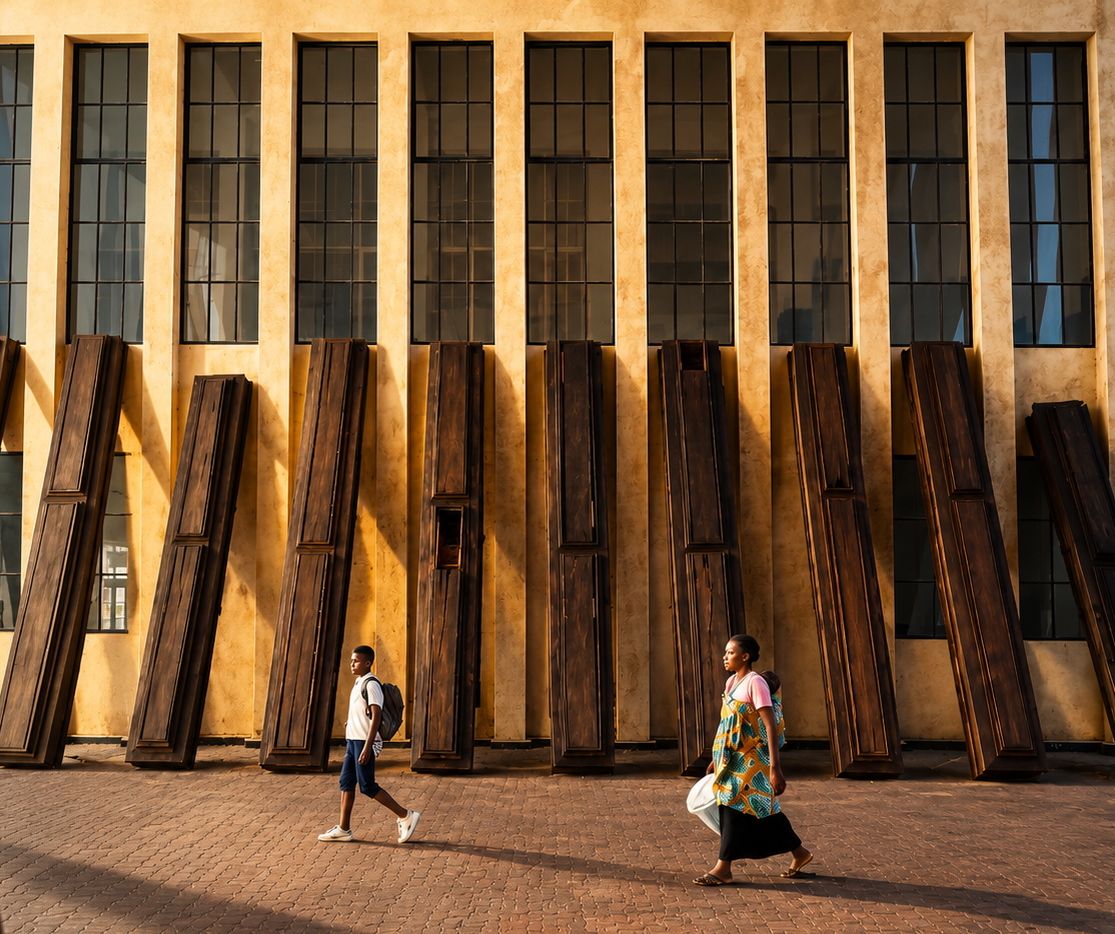
Ibrahim Mahama, Strangers to Lines, 2019. Installation view, Lubumbashi Biennale, Institute of Fine Arts, Lubumbashi, 2019. Photo: Julien De Bock. Courtesy Picha.
The independent art and research centre Picha, based in Lubumbashi, Democratic Republic of the Congo (DRC), has launched a fundraising campaign after warning that rising operating costs and declining international funding are threatening the continuation of its activities. Founded in 2008, Picha is the originating institution behind the Lubumbashi Biennale, one of the continent’s longest-running contemporary art biennales and a key platform for artistic exchange, research, and critical dialogue.
For more than fifteen years, Picha has played a central role in shaping the contemporary art landscape in the DRC. Through exhibitions, research programmes, residencies, workshops, publications, and public activities, the organisation has developed a vital cultural infrastructure in Lubumbashi, creating spaces for artists, researchers, and audiences to engage with urgent questions around history, memory, ecology, extraction, and the social transformations shaping the region.
Founded by artists and cultural practitioners, Picha has positioned Lubumbashi as an important site for contemporary artistic production and knowledge exchange. The Lubumbashi Biennale emerged from this commitment, growing into an internationally recognised platform that brings together artists, curators, and researchers from across Africa and beyond while remaining deeply rooted in the local context from which it emerged.
Over successive editions, the Biennale has explored the complex realities of contemporary life through artistic and research-based practices, foregrounding perspectives shaped by Central African histories and experiences. Beyond the biennale format, Picha’s year-round work has contributed to sustaining a wider ecosystem of artistic production, mentorship, and exchange.
The organisation’s current campaign responds to the growing pressures facing independent cultural infrastructures globally, particularly the combined impact of increasing operational costs and shifts in international arts funding. According to Picha, the funds raised will support the continuation of its artistic and research programmes, public activities, operational costs, and preparations for the ninth edition of the Lubumbashi Biennale.
At a moment when many independent art organisations are navigating uncertain futures, Picha’s situation reflects broader questions around how cultural infrastructures are sustained and who supports the long-term labour required to maintain spaces for artistic production and knowledge exchange. The future of the Lubumbashi Biennale is closely connected to the organisation that conceived, developed, and continues to nurture it.
Sorana Munsya and Jermay Michael Gabriel, curators of the 2026 Lubumbashi Biennale
Announcement
The S+T+ARTS Afropean Intelligence Archive

The Barbican Centre presents Project A Black Planet: The Art and Culture of Panafrica

Tanka Fonta wins the Wi Di Mimba Wi Prize 2026
Announcement

Melvin Edwards (1937–2026)
Pre-Sale! C& Artists’ Editions #6: Thenjiwe Niki Nkosi